Reviewed · PORTO TOURS
Porto: Tile Painting and Cocktails in Downtown Porto
Porto’s famous blue-and-white façades are more than pretty decoration. At Boiler Studio, you get to learn how Portuguese azulejos developed, then paint one yourself while sipping a cocktail. The session is part history lesson, part art class, and part easygoing social break.
I like the patient, hands-on instruction, especially for anyone who thinks they are not artistic. I also like the useful souvenir: you make a real ceramic tile rather than buying another factory-made trinket. The main consideration is timing. Your tile may need extra drying time, so an afternoon class could mean returning later or the next day to collect it.
In This Review
- Key points to know before booking
- Why painting a Porto tile makes sense
- Arriving at Boiler Studio on Rua Chã
- The opening lesson: from Arabic influence to modern Porto
- Choosing a design and getting started
- Cocktails, calm music, and a social pace
- How much help will you receive?
- Taking your tile home
- Is $41 a fair price?
- Who should book this activity?
- Booking advice and final verdict
- FAQ
- Where does the tile-painting workshop take place?
- How long does the activity last?
- What is included in the $41 price?
- Do I need to bring painting supplies?
- Can I choose my own tile design?
- Can I take my painted tile home?
- What languages are available?
- Is the workshop suitable for children?
Key points to know before booking
- Paint a real ceramic azulejo: Choose from prepared patterns or ask the studio to print a personal design.
- Learn before you paint: The introduction covers Arabic origins, Portuguese influences, colors, styles, and uses across Portugal.
- Cocktails are included: A Porto Tonic or another cocktail gives the class its relaxed painting-and-sip feel.
- Daniella, Emmanuel, and other hosts guide you: Help is available at each stage, from tracing to brushwork.
- Central location: Boiler Studio is at Rua Chã 77, opposite Porto Cathedral and close to São Bento Station.
- Plan around the age rule: The activity is listed for ages 10 and up, even though one family managed to include a younger child.
Why painting a Porto tile makes sense
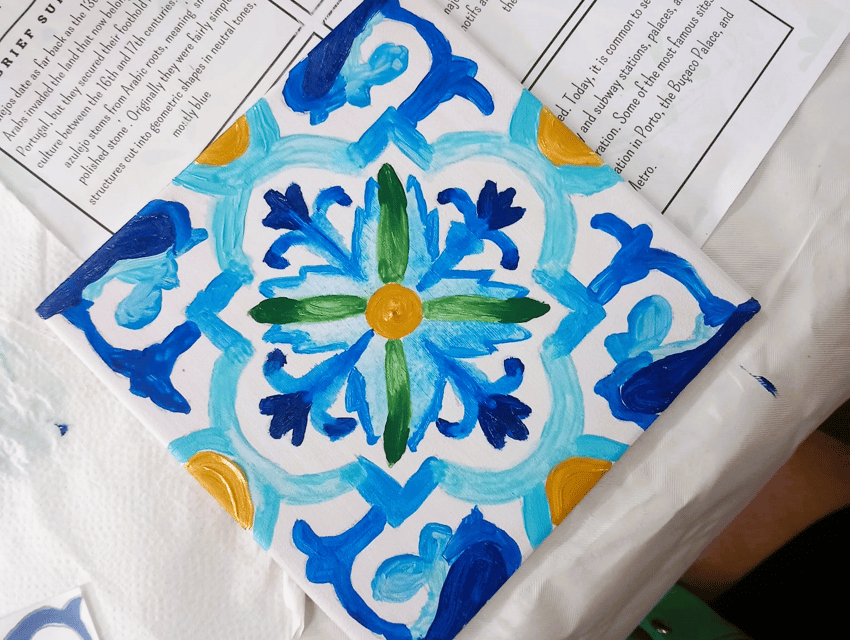
You will see azulejos everywhere in Porto: on churches, railway stations, apartment façades, chapels, and ordinary homes. It is easy to admire the patterns without understanding why tiles became such a major part of Portuguese design.
This workshop gives you a simple way to connect those city walks with a hands-on activity. You first hear how tiles reached the Iberian Peninsula through Arab influence, then how they became firmly rooted in Portuguese culture during the 16th and 17th centuries. The word azulejo comes from Arabic and refers to a small polished stone, a useful reminder that the tradition did not begin as a purely Portuguese invention.
The early forms were often geometric and fairly restrained, with blue appearing again and again. Over time, Portuguese tile work took on many roles and styles. It could decorate a grand church, mark a railway station, cover a house front, or add pattern to a small interior space.
I find that background valuable because it makes the city more readable. After the class, you may look differently at the tiled walls around São Bento Station or the churches near Porto Cathedral. You are not just seeing a blue pattern. You have a little context for its color, shape, and place in Portuguese life.
Other Porto days travellers weigh against this one:
- The Unvanquished Tour in Porto City Center
★ 5.0 · 26,497 reviews - From Porto: Douro Valley w/ Boat Tour, Wine Tasting & Lunch
★ 4.7 · 19,061 reviews - Complete Douro Valley Wine Tour with Lunch, Wine Tastings and River Cruise
★ 5.0 · 12,920 reviews
Arriving at Boiler Studio on Rua Chã
The workshop takes place at Boiler Studio, a shop and creative space at Rua Chã 77. The address is on a typical street directly in front of Porto Cathedral, so it is easy to pair with a day of sightseeing in the historic center.
São Bento Train Station, the Luís I Bridge, Time Out Market, and the Cathedral are all named as nearby reference points. That makes this a practical activity for a rainy afternoon or for a gap between major sights. You do not need to set aside half a day for transport.
The studio also sells handmade products made by local artists. Give yourself a few minutes to browse before or after the class, but remember that the shop is an extra retail stop, not part of the workshop fee. It can be a good place to find a second handmade gift if your own tile inspires you.
The setting matters here. You are not painting in an anonymous conference room far from Porto’s old center. You are working close to the tiled buildings that give the city much of its character. That connection helps the activity feel tied to Porto rather than simply being a generic craft class.
The opening lesson: from Arabic influence to modern Porto
The first part of the two-hour session covers the story of tiles in Portugal. The presentation includes who brought the tradition, the outside influences that shaped it, its colors, and the ways tiles are used today.
Expect the lesson to move across different periods, cities, and seasons. The supplied material places the roots of azulejos as far back as the 13th century, when Arab forces invaded parts of the land that now includes Spain and Portugal. The tradition became especially important in Portugal in the 16th and 17th centuries.
This is not presented as a long academic lecture. It is there to give your painting some meaning. You learn why tiles are so common, why blue is so familiar, and how decoration can carry ideas about place and identity.
The hosts named in the activity feedback include Daniella, Emmanuel, and Diogo. Daniella is especially associated with the history talk and the practical teaching. The class is available in English and Portuguese, which makes it suitable for international visitors who want clear instruction.
I would pay attention during this opening section, even if you came mainly to paint. It lasts only part of the session, but it changes how you see Porto’s buildings for the rest of your stay.
Choosing a design and getting started
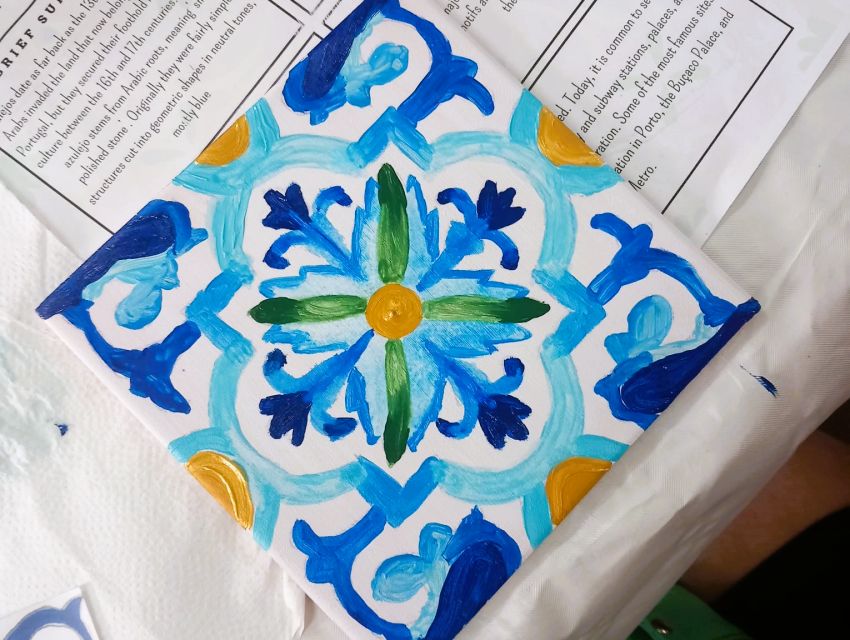
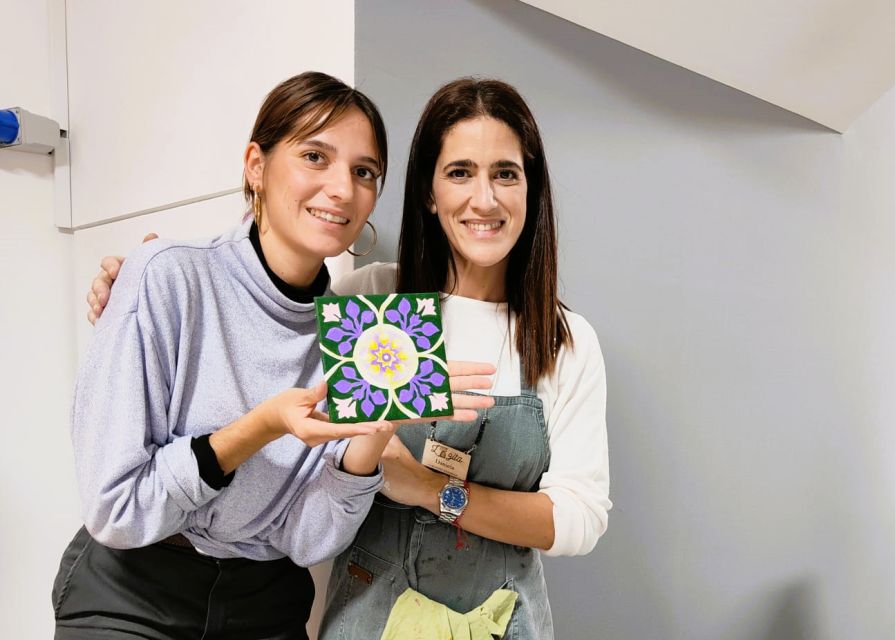
Once the introduction is over, you receive a ceramic tile, acrylic paints, brushes, and the rest of the materials. Everything needed for the activity is included in the $41 price per person, including a cocktail and paper packaging for taking the tile away.
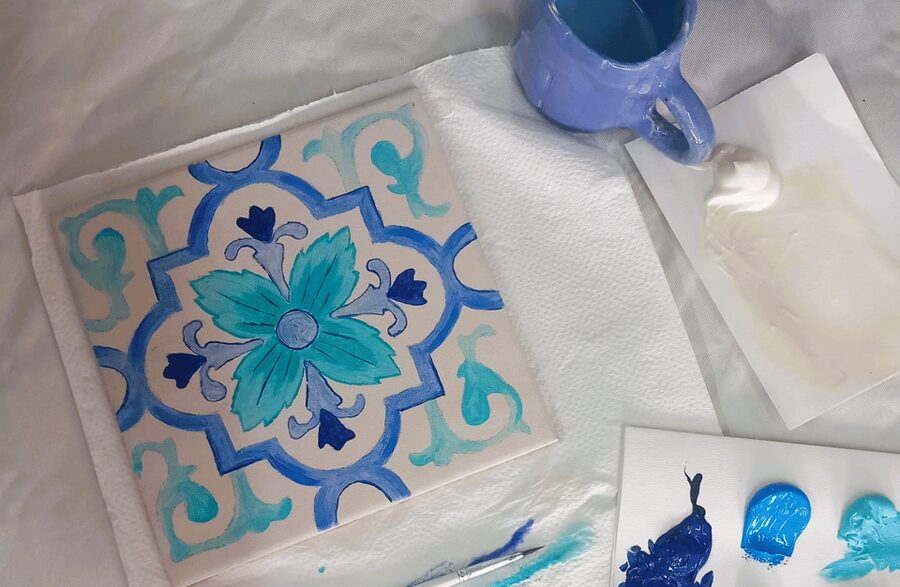
You can choose from prepared patterns and stencils. This is a helpful option if you want a traditional-looking result or simply do not know where to begin. You can also create your own design, and the studio can print a personal image or pattern for you, according to the information provided by people who took part.
That choice makes the class work for different kinds of participants. You can follow a pattern closely, adapt one of the studio’s designs, or bring a more personal idea. The activity is not built around artistic talent. It is built around giving you enough structure to make something you are happy to keep.
The painting process is guided step by step. The instructors show you how to use the chosen design and are available when you need help. This matters because tile painting can look easier than it is. Small mistakes in proportion or color can change the whole design, and a quick tip at the right time can save a great deal of frustration.
You should still expect an imperfect handmade result. That is part of its charm. Your tile will show that you made it in Porto, rather than pretending to be a museum piece.
A different kind of day out, same corner of Portugal:
- Porto: Six Bridges Cruise
★ 4.2 · 11,680 reviews - Porto: Live Fado Show with Glass of Port Wine
★ 4.8 · 6,498 reviews - Porto: 6 Bridges Douro River Cruise
★ 4.3 · 6,472 reviews - Porto: Torre dos Clerigos Entrance Ticket
★ 4.6 · 6,395 reviews
Cocktails, calm music, and a social pace
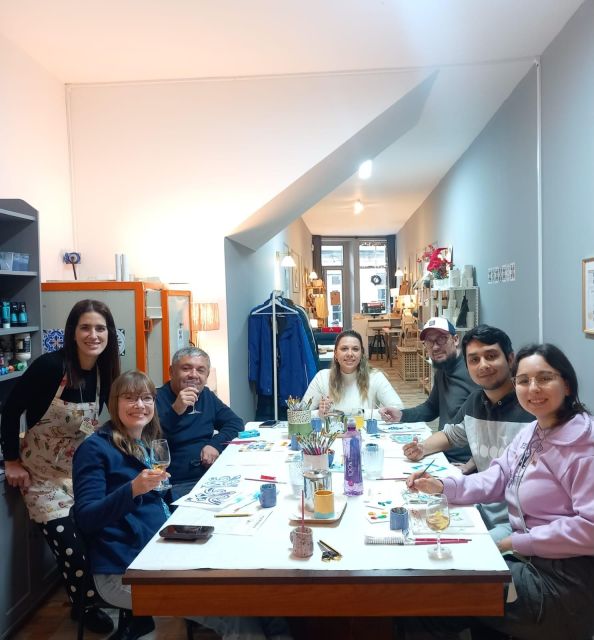
The cocktail is not just a drink added to the booking page. It helps set the tone. The activity is designed as a break from walking, with calm music, a relaxed workspace, and time to paint without feeling pushed through a strict production line.
The Porto Tonic, made with port wine and tonic, is one drink specifically mentioned. Other participants describe the cocktails as tasty, and one also enjoyed coffee during the session. The exact drink may depend on what the studio is serving that day, so treat the cocktail as part of the included experience rather than ordering around a fixed menu.
You will be painting alongside other people, often from different countries. That can make the class more social than a standard museum visit, but it also means the atmosphere depends partly on the group present that day. If you want complete quiet and private instruction, this may not be your ideal activity.
For most people, the shared table is an advantage. It gives you someone to compare colors with, and it makes the two hours feel informal. The hosts are described as friendly, attentive, funny, and encouraging. They adjust their help to different skill levels, which is important when one person in a couple is comfortable with art and the other is not.
How much help will you receive?
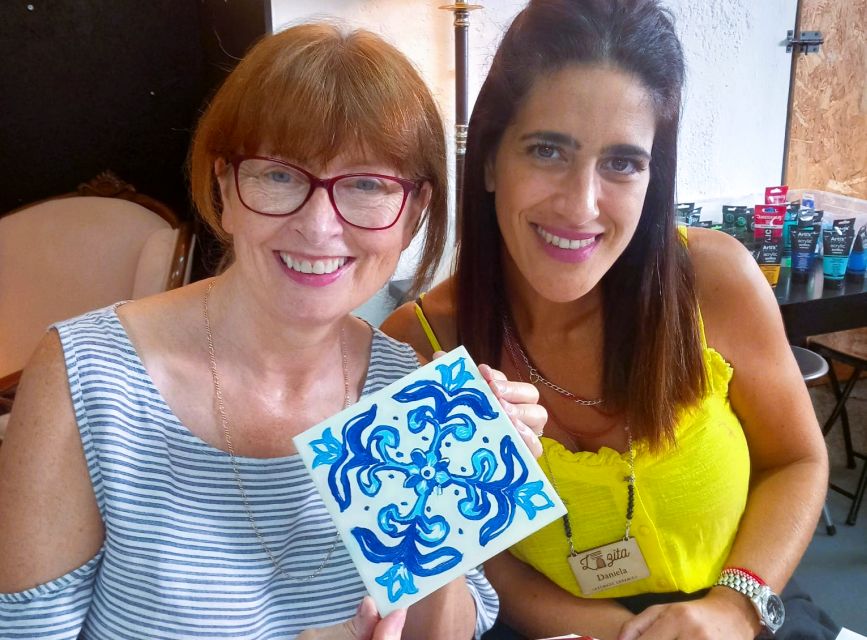
You do not need previous painting experience. The teaching includes practical advice, and the staff can step in when you have questions or need a technique explained again.
The activity suits a wide range of ability. A potter may enjoy the chance to work with a culturally important form, while someone who rarely paints can follow a stencil and receive help with the details. The approach is hands-on without taking over your project.
That balance is worth noting. Some craft classes give you a template and leave you alone. Others have an instructor complete too much of the work. Here, the useful pattern seems to be guided independence: you make the choices and paint the tile, while the instructor helps you avoid common problems.
One practical point is that the two-hour duration is an estimate for the scheduled activity. Several people needed more time to finish, and the staff allowed them to continue rather than forcing an unfinished tile into its packaging. If you work slowly or choose a detailed pattern, do not schedule an important attraction immediately afterward.
Taking your tile home
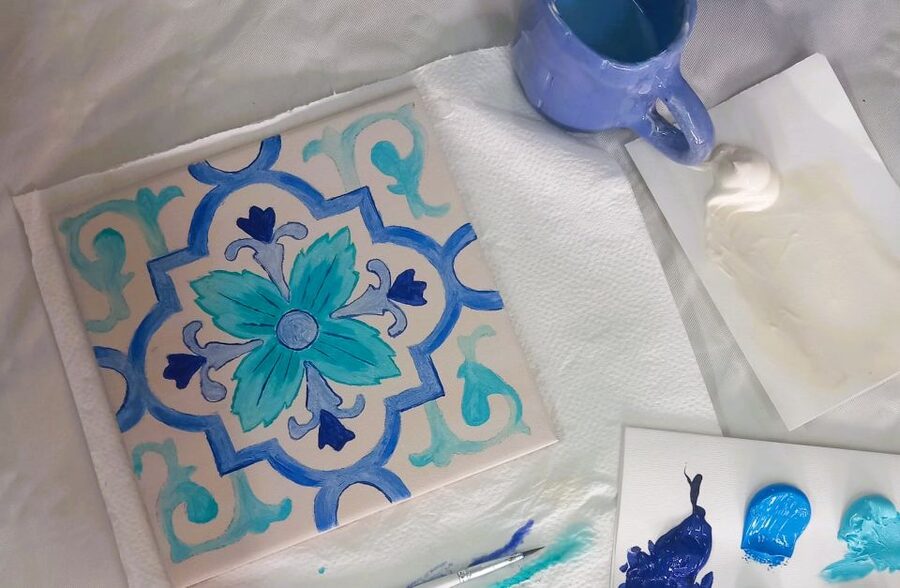
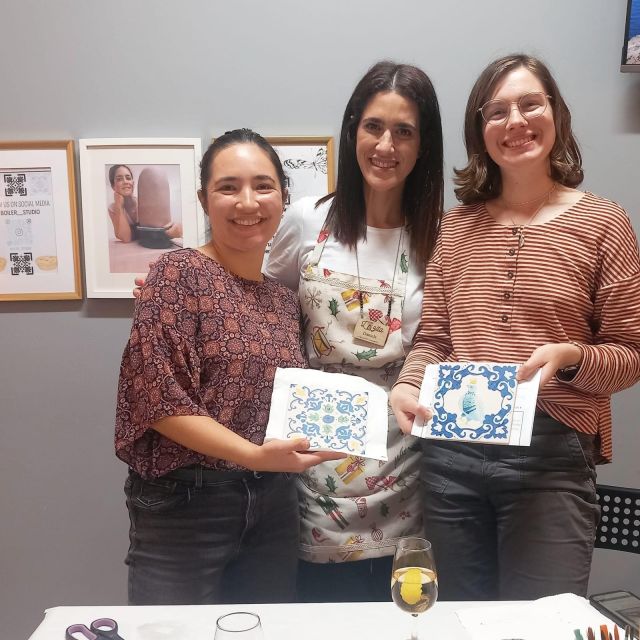
A major benefit is that you can take your painted tile with you as a physical reminder of Porto. Paper packaging is included, so you do not need to arrive with your own box or wrapping materials.
The drying process is the part that requires planning. Some people collected their tile later the same afternoon, while others needed to return the following day, particularly after an afternoon session. The information provided does not promise one fixed collection time for every booking.
Ask the studio when your piece will be ready before you leave. If you have a morning class, same-day collection may be easier. With a later session, plan for a return visit or confirm the collection arrangement in advance.
The tile is a much better souvenir for many people than another small purchase from a tourist shop. It carries your own design, even if you used a stencil, and the making of it becomes part of the memory. It is also compact and easy to pack compared with larger crafts.
Do take care with it in your luggage. The studio provides paper packaging, but a ceramic tile can still crack if it is squeezed between shoes and heavy clothing. Keep it somewhere firm and protected for the journey home.
Is $41 a fair price?
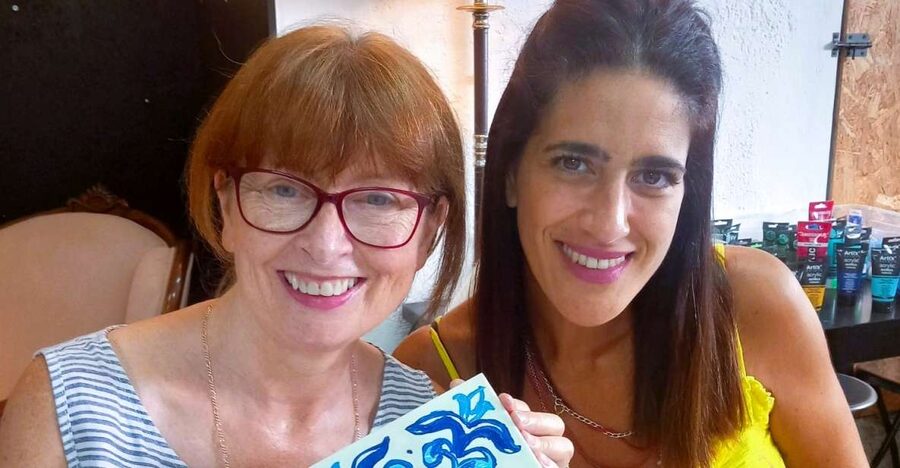
At $41 per person, this is not the cheapest way to spend two hours in Porto. You are paying more than you would for a self-guided walk or a simple drink in a café.
The value comes from the combination. The price includes the tile, acrylic paints, brushes, packaging, the educational introduction, instructor support, and a cocktail. You also leave with a handmade object that would cost money to buy separately, even before accounting for the class itself.
I think the price is fair if you value a structured cultural activity and a souvenir you make yourself. It is less appealing if you mainly want a quick craft project or do not care about the history lesson. The experience is best viewed as a small workshop with a drink, not as a cheap art supply session.
It also offers good value on a wet day. Porto weather can make long sightseeing plans unpleasant, and this gives you two indoor hours near major central sights. You can learn something, meet people, and make progress on a keepsake without losing a full day to bad weather.
Who should book this activity?
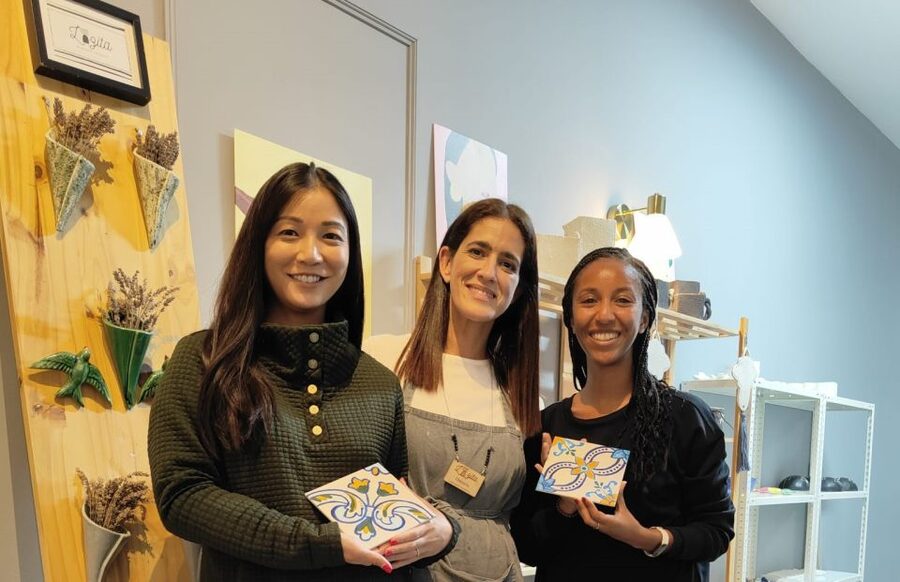
I would recommend it for couples, friends, solo visitors, and families with children aged 10 or older. It works particularly well when people in the same group have different interests. One person can focus on the cultural background, another on the painting, and another on the cocktail and social side.
It is a good choice for you if:
- You want an activity connected to Porto’s architecture and traditions.
- You like making souvenirs rather than only buying them.
- You are not confident at art but appreciate clear guidance.
- You need an indoor plan near the Cathedral.
- You enjoy meeting other people in a casual workshop.
- You want a slower break between sightseeing stops.
The listed minimum age is 10. One piece of feedback describes a nine-year-old enjoying the class, but that does not replace the stated age rule. If you are booking for a child under 10, confirm with Boiler Studio first rather than assuming admission.
The studio is wheelchair accessible, which makes it a useful option for visitors looking for an accessible central activity. The listed languages are English and Portuguese. Smoking, fireworks, and explosive substances are not allowed, though those restrictions are unlikely to affect a normal workshop visit.
Booking advice and final verdict
You can cancel up to 24 hours before the activity for a full refund, and the reserve-now-pay-later option lets you hold a place without paying immediately. These terms are useful when your Porto plans depend on weather or changing sightseeing times.
I would book this workshop if you want more than a quick look at tiled façades. The strongest part is the link between the short history lesson and the tile you create afterward. Daniella, Emmanuel, and the other hosts provide enough help to make beginners feel comfortable, while more experienced artists still have room to make their own choices.
Skip it if your schedule is packed with major sights and you dislike sitting for two hours at a shared table. Also skip it if you need to leave Porto immediately after the session, since drying and collection may require extra planning.
For everyone else, this is a smart use of a spare morning or rainy afternoon. You learn why azulejos matter, enjoy a Porto Tonic, and take home something that carries your own fingerprints. At $41, it is a worthwhile choice for a personal souvenir and a calm cultural pause in the center of Porto.
FAQ
Where does the tile-painting workshop take place?
It takes place at Boiler Studio, Rua Chã 77, on a typical street opposite Porto Cathedral in central Porto.
How long does the activity last?
The scheduled activity lasts two hours. Some people may need extra time to complete a detailed design.
What is included in the $41 price?
The price includes the workshop information, one ceramic tile, acrylic paints, other activity materials, paper packaging, and a cocktail.
Do I need to bring painting supplies?
No. All materials needed for the activity are included in the price.
Can I choose my own tile design?
Yes. You can choose from prepared patterns and stencils, or ask the studio to print a personal design for you.
Can I take my painted tile home?
Yes. The tile is yours to take home, but drying time can vary. You may be able to collect it later the same day, or you may need to return the next day.
What languages are available?
Instruction is available in English and Portuguese.
Is the workshop suitable for children?
The activity is listed as unsuitable for children under 10. The studio is wheelchair accessible.
Recently reviewed around Porto
- Douro Valley Prime Tour: Wine Tastings, Boat & Lunch from Porto★ 5.0 · 572 reviews
- Port Wine Tour | 3 Cellars | 7 Tastings | 12 Participants Maximum★ 5.0 · 443 reviews
- PORTO city Walking Tour★ 5.0 · 132 reviews
- Private Vinho Verde Region Wine Tour from Porto Including Lunch★ 5.0 · 39 reviews
- Visit to Cockburn’s Cellars★ 5.0 · 526 reviews
- Wine Tasting with Tapas Walking Tour in Porto★ 4.5 · 544 reviews
- Porto to Lisbon with stop Aveiro-Fátima-Coimbra-Tomar-Nazaré-Óbidos★ 5.0 · 67 reviews
- 3 Hour Tuk tuk Tour in Porto★ 4.5 · 60 reviews
Porto Tours, compared.

Douro Valley w/ Boat Tour, Wine Tasting & Lunch
Read our review →
Complete Douro Valley Wine Tour with Lunch, Wine Tastings and River Cruise
Read our review →