
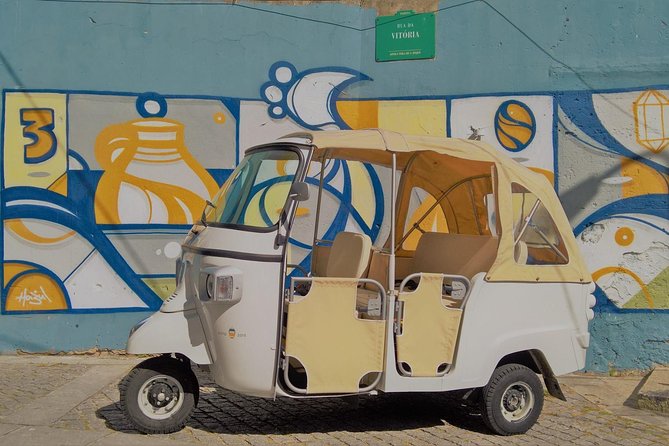
Reviewed · TUK TUK TOURS
Porto Guided Tour to the Historical Center on a Tuk Tuk
Porto’s steep streets make a tuk tuk a smart way to get your bearings fast. In about two hours, you’ll roll from the cathedral and São Bento Station to Clérigos, the Ribeira area, Vila Nova de Gaia, and the grand viewpoint at Serra do Pilar, without spending the whole morning climbing hills.
I like the small private format, which lets your guide adjust the pace and stop for photos. I also like the mix of famous sights and tucked-away streets, plus the included glass of Port wine. The main catch is that traffic, rain, and road closures can cut into sightseeing time, and the open-sided vehicle can make commentary hard to hear.
In This Review
- Key points to know before booking
- Why a Porto tuk tuk makes sense
- From the cathedral to São Bento Station
- Squares, fountains, churches, and Clérigos
- From historic institutions to the Douro
- The Serra do Pilar viewpoint is the payoff
- What the ride feels like in practice
- Price, timing, and who gets the best value
- Should you book the Porto tuk tuk tour?
- FAQ
- How long does the Porto tuk tuk tour last?
- Where does the tour start and finish?
- Is this a private tour?
- How many people fit in one tuk tuk?
- Is Port wine included?
- Are monument entrance fees included?
- What happens if the weather is poor?
Key points to know before booking
- A fast introduction to Porto: The route covers the cathedral, São Bento, Clérigos, the riverfront, major bridges, and Serra do Pilar in roughly 1 hour 50 minutes.
- Private tuk tuk for your group: Each vehicle holds two, three, or four adults of average height, up to 75 kilograms each.
- Best viewpoint: The terrace at Mosteiro da Serra do Pilar gives you a broad view of Porto, Gaia, the Douro, and the Dom Luís I Bridge.
- Strong guide element: Ana, Anna, Victor, Bernardo, Natalia, Gabby, Fabian, and Gonçalo are among the guides praised for humor, local knowledge, good photo stops, and practical tips.
- Port wine is included: You receive a glass during the experience, while monument admission is not included.
- Book early: The experience is commonly reserved about 27 days ahead, so popular dates may fill before your arrival.
Why a Porto tuk tuk makes sense
Porto is compact on a map but demanding on foot. The historic center rises and drops in sharp folds, with polished stone streets, narrow lanes, stairways, and busy traffic around the main sights. A tuk tuk lets you cover ground without using up your legs before lunch.
The value here is not only speed. From the back seat, you can connect parts of Porto that feel separate when explored on foot. The cathedral sits high above the river, São Bento is near the city’s central squares, Clérigos rises in the middle of the old center, and the best broad view comes from across the Douro in Gaia.
I’d schedule this on your first day in Porto. It gives you a rough map of the city, helps you decide which monuments deserve a longer visit, and may point you toward restaurants or viewpoints you would otherwise miss. One guide even helped a couple choose a restaurant, and another adjusted the outing so two people in the group could see the ocean.
This is a private activity, so only your group participates. The minimum booking is two people. Larger groups use more than one tuk tuk but travel together and make the same stops at the same time.
More Historical Tours in Porto
- Douro Valley: Historical Sites, Wine Experience, Lunch & Cruise
★ 5.0 · 5,133 reviews - Porto: Historic City Center Walking Tour
★ 4.7 · 1,172 reviews - Porto: An Intimate Fado Show in a Historical Tavern
★ 4.8 · 1,093 reviews
From the cathedral to São Bento Station
The tour begins near R. de Augusto Rosa 180, close to the cathedral. The first stretch focuses on Porto’s upper historic center, where the city’s religious buildings, old walls, and civic spaces crowd together.
The Porto Cathedral is the main opening stop. Its construction dates from the twelfth and thirteenth centuries, and its Romanesque form was expanded and altered over many years. What you see today is partly an idealized recreation of a medieval cathedral, shaped by restoration in the twentieth century.
You have about 10 minutes here, enough for a quick look and some photos. Admission is not included, so this is primarily an exterior and orientation stop unless you choose to pay separately. If you want time for the cathedral interior, cloisters, or surrounding details, you will need to return later.
Nearby, the stone pillory on the cathedral terrace marks a very different chapter of the city. The surrounding buildings, including the former Bishop’s Palace and Casa do Cabido, were demolished in 1940 under the Estado Novo government’s plan to reshape the area. The present paved terrace and pillory date from 1945, based on an older drawing.
That detail is worth hearing because it reminds you that Porto’s old center is not untouched. Some medieval-looking spaces are the result of later rebuilding and political choices.
The Episcopal Palace follows, with around five minutes for a look. The building may date to the thirteenth century, though it could sit on older foundations. Its eighteenth-century remodeling is linked by some historians to Nicolau Nasoni, the architect associated with several of Porto’s best-known Baroque works.
The palace’s formal façade, framed windows, stone balustrade, and bishop’s coat of arms make it an excellent example of the city’s grand ecclesiastical architecture. Again, entry is not included, so expect a short exterior stop rather than a palace visit.
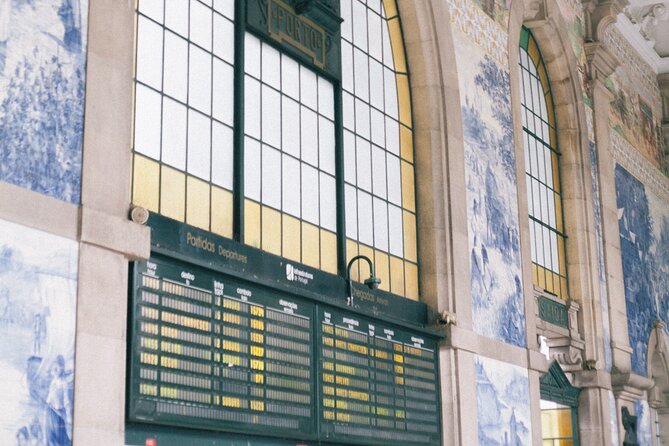
At São Bento Railway Station, the tuk tuk gives you about 10 minutes. The outside is handsome, but the real prize is the entrance hall, covered with about 20,000 blue-and-white narrative tiles by Jorge Colaço. They depict scenes from Portuguese history and daily life.
Even if you are not taking a train, São Bento deserves a stop. It is one of Porto’s easiest sights to appreciate quickly, and the tiled hall offers a lot in a small space. Since admission is free, you can return later if your tour moves too quickly.
Squares, fountains, churches, and Clérigos
The route then moves through a series of central squares and public spaces. The first square grew from an eighteenth-century urban project that created new streets and a broad open area known as Praça Nova. Medieval walls and former urban palaces once bordered it, though those earlier structures are gone.
Another square recalls its former association with blacksmiths. Its later name honors Charles Albert of Sardinia, who lived in Porto in exile. A monument in the garden commemorates Portuguese soldiers who died in the First World War.
At Fonte dos Leões, you get a brief five-minute stop. This nineteenth-century fountain was made by a French company and cast at the Val d’Osne foundry. Its design is largely copied from the fountain in Leicester’s Town Hall Square in England.
It is not one of Porto’s headline monuments, but that is exactly why the stop works. The fountain adds a small piece of urban detail to the larger story, and the pause breaks up the ride.
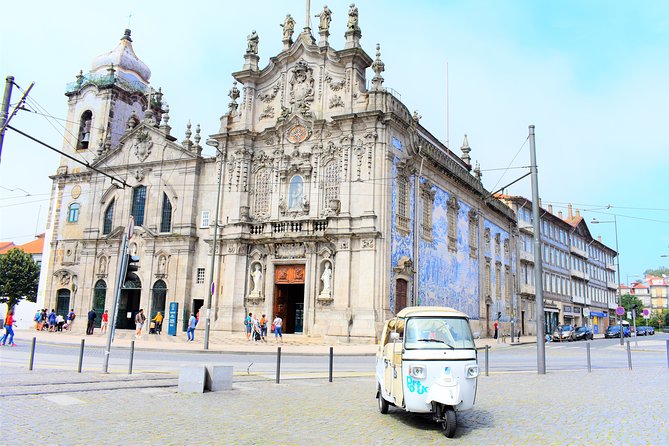
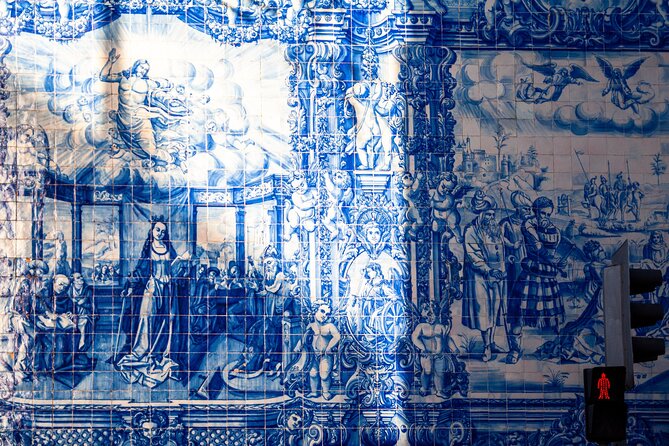
Several churches appear next, including a seventeenth-century church with a classical façade and a Porto Rococo altarpiece, and another eighteenth-century church whose side façade was covered in figurative tiles in 1912. Both are national monuments. Your guide can point out the carved interiors and tile work, but the short format may not allow a full visit inside.
The stop at Cordoaria Garden, also called João Chagas Garden, gives you a change of pace. The public garden was created in the nineteenth century on a site linked to rope makers. The design came from German landscaper Émile David, and the garden includes statues of Portuguese writers, modern sculptures by Juan Muñoz, and a sculpture depicting the kidnapping of Ganymede.
The garden is useful as a visual pause between dense streets and heavy churches. You may have only a short time to look around, so do not treat it as a full park visit. It is better understood as part of the city tour, not a destination to explore at length.
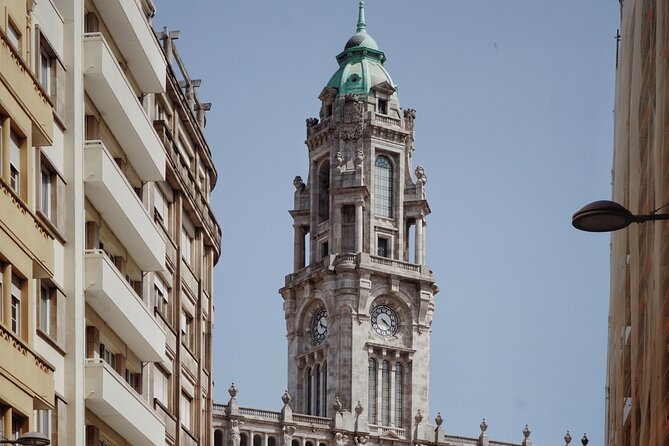
Next comes Clérigos Tower, one of Porto’s defining landmarks. The Baroque church and tall bell tower can be seen from many parts of the city. You get about five minutes here, with admission not included.
That timing is enough to admire the exterior and hear the story, but not enough to climb the tower. If you want the stairway, city views, and more time inside the church, plan a separate visit. The tuk tuk tour helps you decide if that extra stop belongs on your schedule.
From historic institutions to the Douro
The route continues past the old São Bento da Vitória monastery, a late sixteenth-century religious complex later used by Benedictine monks, the Porto National Orchestra, archives, and the National Theatre São João. Part of the building now hosts performances, concerts, and special events.
You then pass the Palácio da Bolsa, or Stock Exchange Palace. This neoclassical building dates from the nineteenth century and remains the headquarters of Porto’s Commercial Association. Its famous Arabian Room is the major interior highlight.
The palace is one of the city’s most important paid monuments, but admission is not included in this outing. I would not count on fitting a full visit into the tuk tuk schedule. Instead, use the drive-by to mark it for a later tour, especially if ornate interiors appeal to you.
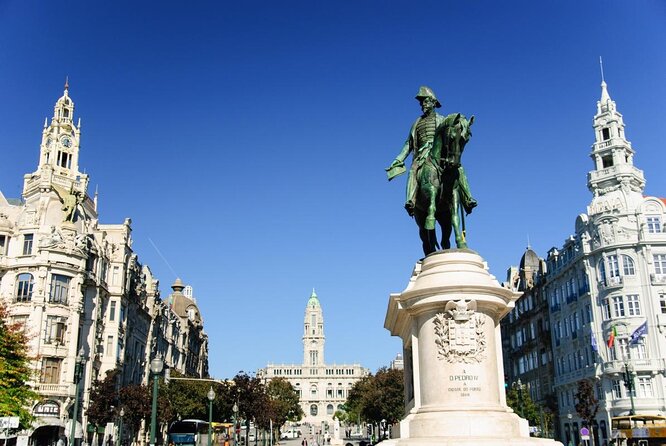
A monument to D. Pedro appears along the way. Created by sculptor Célestin Anatole Calmels and architect Joaquim da Costa Lima, it was unveiled in 1866. Its reliefs refer to D. Pedro’s donation of his heart to Porto and his arrival in Mindelo, while the statue shows him offering the constitutional charter to the city.
The route also passes the Livraria Lello building, recognized for its Art Nouveau façade with neo-Gothic details. Inside are painted plasterwork, a large stained-glass skylight, and a dramatic red staircase. The library has received international attention for its design, but this tour does not include entrance.
That distinction matters. You’ll see many of Porto’s best-known buildings, but this is an orientation tour, not a ticketed monument crawl. I like that arrangement for a first look, though you should budget separately for any interiors you want to explore.
Near the river, you pass the former Mercado Ferreira Borges, an iron market built in 1885 to replace an older market. It later served several purposes and now houses Hard Club, an entertainment venue.
The nearby square contains a garden, an underground car park, and a monument to Infante D. Henrique, linked to Portugal’s age of navigation. The setting brings you close to the historic center and the Douro without requiring a long walk down to the waterfront.
Another major stop is the Church of São Francisco, Porto’s most important Gothic church. Construction began in the fourteenth century, while the interior received lavish gilded woodwork in the seventeenth and eighteenth centuries. The quantity of gold led to its famous nickname, the Church of Gold.
The Tree of Jesse and catacombs are key details to look for inside. Since entry is not included and the tuk tuk stop is not listed as a timed admission visit, you should return separately if you want to inspect the interior properly.
You also pass the former Alfândega Nova do Porto, a nineteenth-century neoclassical customs building with façades facing both the city and the river. Its construction combines iron with stone, brick, and wood. After restoration by architect Eduardo Souto de Moura, it became home to the Museum of Transport and Communications and a congress center.
More Tuk Tuk Tours in Porto
- Discover Porto’s Highlights on a 2-Hour Private Electric Tuk Tuk
★ 4.5 · 1,860 reviews - Historic Porto by Private Electric Tuk Tuk to Top Landmarks
★ 4.5 · 735 reviews - Porto: Private Sightseeing Tour by Electric Tuk Tuk
★ 4.8 · 305 reviews - Porto Half Day Tuk Tuk Tour Clérigos, Seaside and Viewpoints
★ 4.6 · 44 reviews
The Serra do Pilar viewpoint is the payoff
The most memorable part of the route is usually the crossing toward Vila Nova de Gaia and the stop at Mosteiro da Serra do Pilar. You get about 15 minutes here, and the admission is listed as free.
The monastery began in 1538 and took more than a century to complete. Its circular church and circular cloister are unusual, with the cloister formed by 36 Ionic columns. The site also played a military role during Portugal’s Civil War, when the liberal army occupied it.
From the terrace, you can see Porto’s riverfront, Gaia, the Dom Luís I Bridge, the cathedral, the Fontainhas area, and the São João Bridge. This is the stop that makes the tuk tuk format especially useful. You get a wide view of the city’s shape, something that is hard to grasp from the narrow lanes below.
The Dom Luís I Bridge was designed by Teófilo Seyrig, a disciple of Gustave Eiffel, and opened in 1886. It has two iron decks, and its large arch remains one of the most notable forged-iron bridge structures in the world. The upper deck now carries Porto Metro between the cathedral area and Gaia.
The route also includes the newer Infante Bridge, opened in 2003 to replace road traffic on the upper deck of Dom Luís I Bridge. Its high arch design links Porto’s Fontaínhas area with Vila Nova de Gaia.
Seeing both bridges helps explain the city’s transport network and geography. You are not simply collecting bridge photos. You are seeing how Porto and Gaia face each other across the Douro and how their main crossings serve different purposes.
What the ride feels like in practice
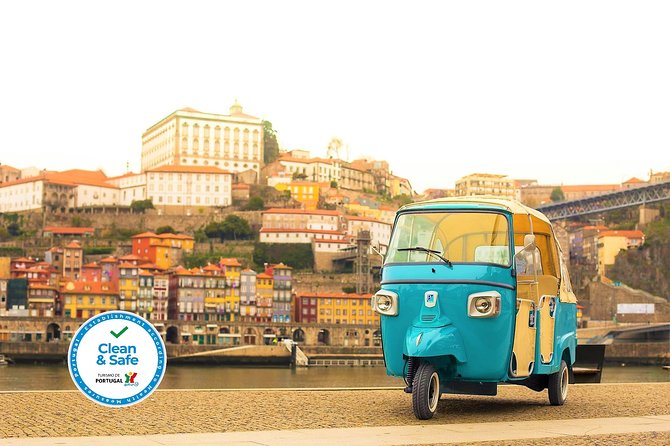
The vehicle is open and compact. Each tuk tuk is intended for two, three, or four adults of average height, with a stated limit of 75 kilograms per person. If you have six people, you will use multiple vehicles, though the group stays together.
That size gives the experience its charm. The tuk tuk can reach narrow cobbled lanes that a larger sightseeing vehicle cannot. It also means less separation from the street, which is useful for photos but less useful for hearing every word while the vehicle is moving.
This is the chief practical weakness. Some guides have been praised for clear, lively explanations, but even a strong guide can be difficult to hear over traffic and engine noise. If a point matters to you, ask the guide to repeat it at the next stop.
The weather matters, too. Poor weather can lead to a cancellation, with a new date or full refund offered. Even when the tour operates, wind and rain can make the ride uncomfortable. Bring a raincoat rather than relying on an umbrella, which is awkward in a small open vehicle.
Road conditions can affect the route. Porto has had unexpected closures connected with metro construction, and local traffic can delay the final part of the outing. One poor experience involved a late guide, a hard-to-find meeting point, limited explanation, and a long spell in traffic. These problems are not the intended format, but they are worth keeping in mind if your schedule is tight.
The tour ends back at the meeting point. Guides may sometimes drop you at a different location if arrangements allow, but you should not rely on that unless confirmed directly.
Price, timing, and who gets the best value
At $42.33 per person, the tour is fairly priced for a private ride, a local driver-guide, nearly two hours of touring, and a glass of Port wine. The value improves if you are traveling with two to four people because you receive a private experience rather than joining a large vehicle.
The price is less attractive if you expect long interior visits. Monument admission is not included, and the stops at the cathedral, Clérigos Tower, Palácio da Bolsa, Livraria Lello, and São Francisco are mainly useful for orientation unless you return later.
I would choose this tour if you have limited time, want help with Porto’s steep streets, or prefer an introduction before exploring on foot. It is also useful for families, provided children are accompanied by an adult. A family with young children found the two-hour format manageable and especially enjoyed the viewpoint.
I would be more cautious if your main goal is detailed art and architectural study. The experience covers a lot, but the schedule is too short for deep interior visits. A walking tour with longer stops may serve you better if you want every tile, carving, and historical detail explained.
Guide quality matters. Ana and Anna are praised for energy, humor, and clear local insight. Victor is noted for passion and restaurant advice, Bernardo for facts and photo help, Natalia for friendliness, Fabian for not rushing stops, and Gonçalo for clear communication and family-friendly organization. Still, individual experiences can vary, and one unengaging guide received strong criticism.
Should you book the Porto tuk tuk tour?
Book it if you want a quick, private overview of Porto, especially on your first day. The Serra do Pilar viewpoint, São Bento tiles, old churches, bridges, and narrow lanes give you a useful first picture of the city, while the Port tasting adds a pleasant local touch.
Do not book it expecting a full guided visit inside Porto’s monuments. Think of this as a moving introduction with selected stops. For the best result, reserve early, allow flexibility for traffic, dress for wind or rain, and return later to the cathedral, Clérigos Tower, São Francisco, the Stock Exchange Palace, or Livraria Lello if their interiors catch your interest.
FAQ
How long does the Porto tuk tuk tour last?
The experience lasts approximately 1 hour and 50 minutes.
Where does the tour start and finish?
It starts at R. de Augusto Rosa 180, 4000-528 Porto, Portugal, and ends back at the meeting point.
Is this a private tour?
Yes. Only your group participates in the activity.
How many people fit in one tuk tuk?
Each tuk tuk holds two, three, or four adults of average height, up to 75 kilograms each. Larger groups use multiple vehicles and travel together.
Is Port wine included?
Yes. A glass of Port wine is included in the experience.
Are monument entrance fees included?
No. Admission to monuments is not included in the tour price.
What happens if the weather is poor?
The experience requires good weather. If it is canceled because of poor weather, you can choose another date or receive a full refund. You can also cancel up to 24 hours before the start time for a full refund.
More Tuk-Tuks in Porto
- Porto: Guided Tour by Tuk-Tuk & Optional Douro River Cruise
★ 4.5 · 5,980 reviews - Oporto Tuk-Tuk Tour: Fast, Fun & Flexible – 1H to Full Day!
★ 4.7 · 280 reviews - True 4Hour Private Tuk Tuk Tour: Discover Lisbon with a Local!
★ 5.0 · 8,008 reviews - Lisbon: Private Guided Tuk-Tuk Tour with Hotel Pickup
★ 4.9 · 4,552 reviews
Recently reviewed around Porto
- Bridges Cruise with World of Discoveries or Sunset Option★ 4.0 · 219 reviews
- Porto Card Walker (1, 2, 3 or 4 Days)★ 3.4 · 135 reviews
- Porto: 6 Bridges Yacht Cruise with Local Wine & Snacks★ 5.0 · 399 reviews
- Porto: 5D Flight over de City for all family.★ 4.0 · 281 reviews
- Porto:Aveiro, Cruise, Costa Nova & Capelha da Pedra Full Day★ 4.5 · 434 reviews
- Porto Private E-Bike Tour: Douro River, Parks & Beaches★ 4.7 · 104 reviews
- Porto: 3-Hour Walking City Tour & Lello Bookstore Visit★ 4.7 · 99 reviews
- Port Wine class with 3 or 5 Port tasting and pairings★ 4.9 · 441 reviews
Tuk Tuk Tours, compared.
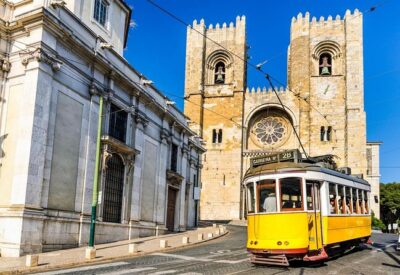
True 4Hour Private Tuk Tuk Tour: Discover Lisbon with a Local!
Read our review →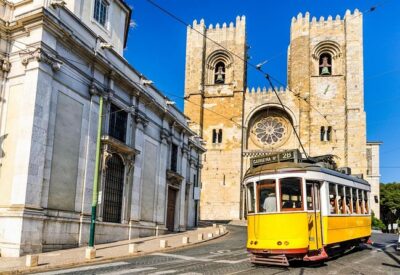
Lisbon Highlights: Private Tuk Tuk Tour Adventure Sightseeing
Read our review →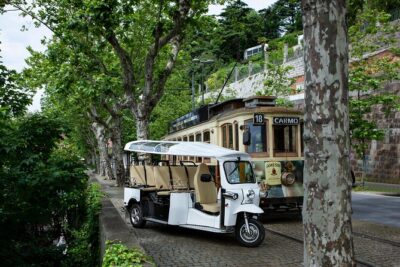
Discover Porto’s Highlights on a 2-Hour Private Electric Tuk Tuk
Read our review →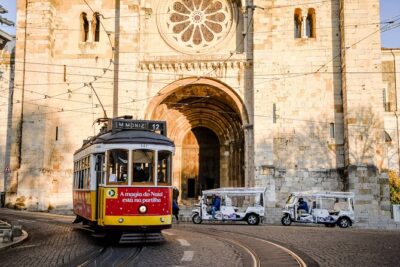
Welcome Lisbon Tour with Local Guide in Private Eco Tuk Tuk
Read our review →
Explore Lisbon by Tuk Tuk: History and Viewpoints
Read our review →
Historic Porto by Private Electric Tuk Tuk to Top Landmarks
Read our review →Browse the lists this tour appears in