
Reviewed · DOURO VALLEY DAY TRIPS
Porto: Douro River Boat Cruise with Port Wine and Snacks
Porto makes more sense from the Douro. From a small boat, you see the city’s tiled slopes, Vila Nova de Gaia’s port lodges, and its famous bridges in one calm sweep. The guides point out the old bridge crossings and explain how the river shaped Porto’s trade and daily life.
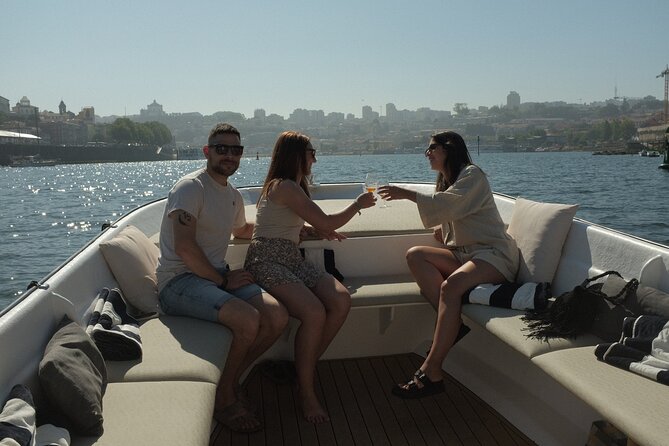
I like the small-group setting, which feels far more personal than a large sightseeing boat. I also like the three-wine tasting, usually vinho verde, white port, and red port, served with almonds, dried figs, and dark chocolate. The main drawback is simple: there is no toilet onboard, and the snacks are light rather than a meal.
In This Review
- Key points to know before you book
- Why Porto looks better from the Douro
- Freixo Marina: the practical starting point
- The Douro as Porto’s main stage
- Porto’s oldest bridge and the bridge built in 1881
- Ribeira and the medieval riverfront
- Dom Luís I Bridge and Vila Nova de Gaia
- Alfândega and Porto’s trading past
- The glass gazebo and the city gardens
- Arrábida Bridge and the turn toward the coast
- Three wines and a very small snack plate
- How the small boat changes the experience
- Is $48.37 good value for two hours?
- Who should book this Douro cruise?
- FAQ
- Where does the Douro River cruise start?
- Where does the cruise finish?
- How long does the cruise last?
- How many people can join the boat?
- Which wines are included?
- What snacks are served?
- Is there a toilet on the boat?
- What happens if bad weather cancels the cruise?
- Should you book it?
Key points to know before you book
- A two-hour cruise from Freixo Marina gives you a broad view of Porto without taking up half a day.
- The advertised group limit is eight people, creating an almost private-charter feel.
- Three Portuguese wines are served, including vinho verde, white port, and red port.
- The route passes Porto’s main river sights, including Dom Luís I Bridge, Gaia, Alfândega, and the Arrábida Bridge.
- The crew provides live commentary, with hosts such as Fabio, Angelo, Marcello, María, Ricardo, Duarte, Antonio, and Alfonso praised for their warmth and humor.
- Plan for a light snack, not lunch, and remember that weather can affect departure.
Why Porto looks better from the Douro
Porto is a city of steep streets, grand churches, iron bridges, and tightly packed buildings. From land, you often experience it one hill at a time. From the river, the pieces line up.
The cruise begins on the Douro, a river whose name comes from the Latin word for gold. That sounds poetic, but it fits the view. The water reflects the granite façades, bright roofs, and changing light on both banks. You can sit back while someone else handles the boat, which is a real pleasure in a city where walking often means climbing.
This is not a long journey into the Douro Valley. It is a city cruise that heads along the river toward the Atlantic and gives you a different angle on Porto and Gaia. That distinction matters. If you want vineyard terraces and inland scenery, you need a separate day trip. If you want bridges, riverfront architecture, wine cellars, and city views, this shorter outing is better suited.
More Boat Tours in Porto
- From Porto: Douro Valley w/ Boat Tour, Wine Tasting & Lunch
★ 4.7 · 19,061 reviews - Complete Douro Valley Wine Tour with Lunch, Wine Tastings and River Cruise
★ 5.0 · 12,920 reviews - Porto: Six Bridges Cruise
★ 4.2 · 11,680 reviews
Freixo Marina: the practical starting point
The meeting point is Boating Porto at Marina do Freixo, on N108 in Porto. It is not in the central Ribeira waterfront, so allow extra time to reach it and use the exact address when planning your arrival. One person found the pickup location hard to locate, but considered the effort worthwhile.
The boat returns to the same place after roughly two hours. That makes the experience easy to fit into a morning or afternoon, but it also means you should not treat the marina as a central drop-off point for your next activity.
The cruise is offered in English and includes a mobile ticket. Confirmation arrives at booking. Service animals are allowed, and the activity is near public transportation. Most people can take part, but the small boat has limited space and no bathroom.
The advertised maximum is eight people. That is one of the strongest reasons to choose this trip over a large river vessel. There is one account of ten people being onboard, so if the group size is especially important to you, confirm it before departure.
The Douro as Porto’s main stage
Once underway, the river becomes the guide. Porto’s name is tied to its port, and the Douro explains why the city grew here. For centuries, the river carried goods, people, and wine between the inland producing areas and the coast.
The commentary adds useful shape to the view. Instead of seeing a row of bridges, you hear why the crossings mattered and how Porto and Gaia developed on opposite banks. The best guides keep the talk lively rather than turning the cruise into a lecture. Fabio, Angelo, Marcello, María, Ricardo, Duarte, Antonio, and Alfonso are among the hosts praised for clear explanations, jokes, and easy conversation. Your exact crew will vary, but the two-person setup usually includes a captain and a guide.
The boat moves at a relaxed pace. You have time to watch the banks, take pictures, and chat with the small group. Solo visitors can usually settle in easily because the compact setting encourages conversation, while couples and families get a quieter outing than they would on a big sightseeing ship.
Porto’s oldest bridge and the bridge built in 1881
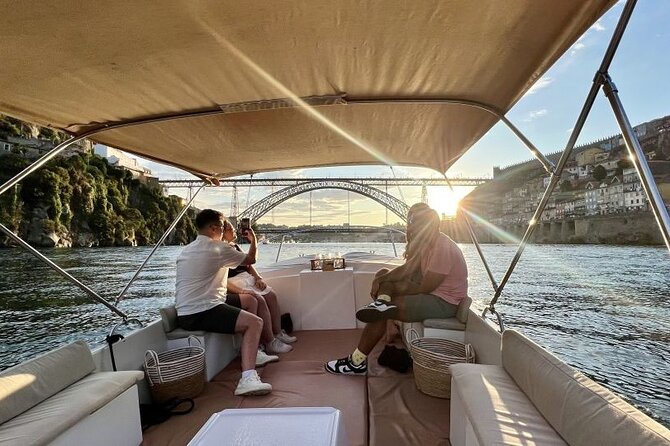
The route brings you past one of Porto’s oldest bridges, where the guide points out details that are easy to miss from street level. Bridges here are not just photo props. They show how the two riverbanks have been connected, and how engineers dealt with the Douro’s steep sides and changing traffic needs.
Another major bridge dates from 1881 and remains in use today. Its age gives the riverfront a strong sense of continuity. From the water, you can study its structure without dodging cars, pedestrians, or viewpoints crowded with picture takers.
Bridge lovers will get the most from this part of the ride, but even if engineering is not your main interest, these crossings help you understand Porto’s layout. Ask the guide about the design and purpose of each bridge. The commentary is one of the elements that separates this outing from a simple boat rental.
More Wine Tastings in Porto
- Porto: Live Fado Show with Glass of Port Wine
★ 4.8 · 6,498 reviews - Porto: Cálem Cellar Tour, Interactive Museum & Wine Tasting
★ 4.5 · 4,113 reviews - Douro Valley Small-Group Tour with Wine Tasting, Lunch and Boat
★ 5.0 · 3,642 reviews - Douro Valley Tour: 2 Vineyard Visits, River Cruise, Winery Lunch
★ 5.0 · 3,542 reviews
Ribeira and the medieval riverfront
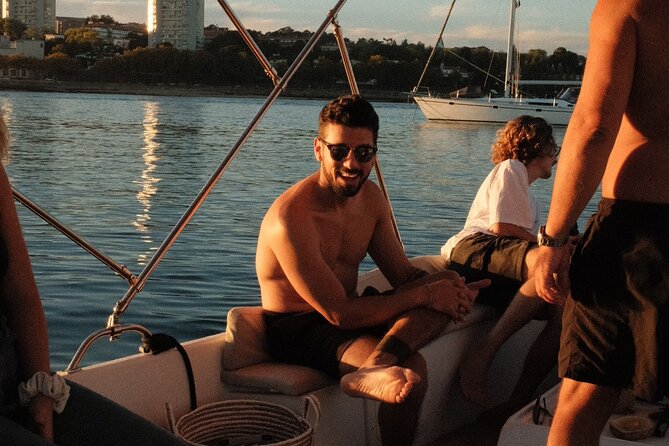
The boat passes Porto’s historic district, the Ribeira area. Its narrow streets and medieval buildings climb away from the river, creating one of the city’s most recognizable views.
From the water, look for the old façades stacked above the quay and the landmarks associated with Porto’s religious and maritime past, including São Francisco Church. The river gives you a useful overview before you explore on foot. You can see how tightly the old district is packed, and why the waterfront has long been the city’s public face.
The boat cannot replace walking Ribeira. You will not wander its lanes or step inside the church during this cruise. What it does provide is a calm introduction, especially useful near the start of your stay. A late afternoon departure can also give you changing light across the buildings and bridges, though the exact effect depends on weather.
Dom Luís I Bridge and Vila Nova de Gaia
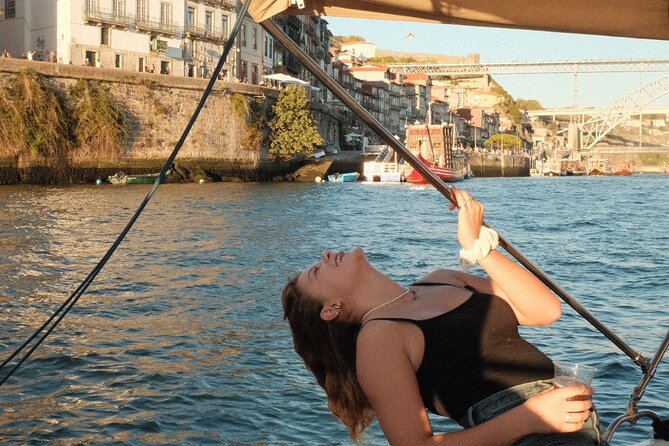
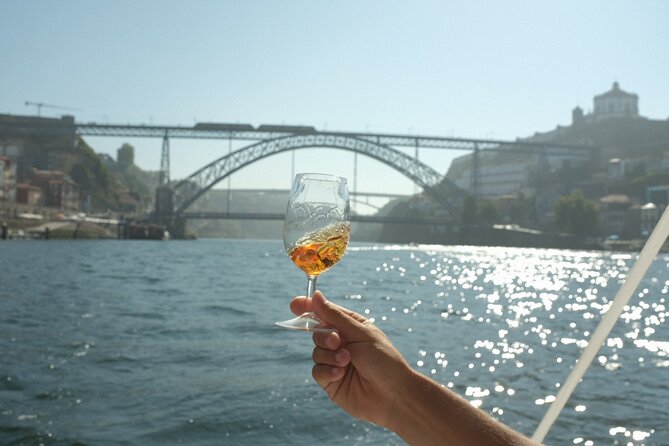
The Dom Luís I Bridge is one of Porto’s unmistakable symbols. Its iron structure links Porto with Vila Nova de Gaia, and the boat offers a low, close view that you cannot get from the upper crossing.
Gaia sits across the water and is famous for its port wine cellars. The cruise gives you a quick look at this waterfront, along with one of the best broad views back toward Porto. You can see why Gaia became so closely tied to port wine: the cellars face the river, and the city rises behind them in a dramatic wall of roofs and church towers.
This portion of the route is especially good for photographs. Keep your camera ready as the boat passes beneath or near the bridge, but also listen to the guide. The story is not only about architecture. It is about trade, transport, and the close relationship between two cities sharing one river.
Alfândega and Porto’s trading past
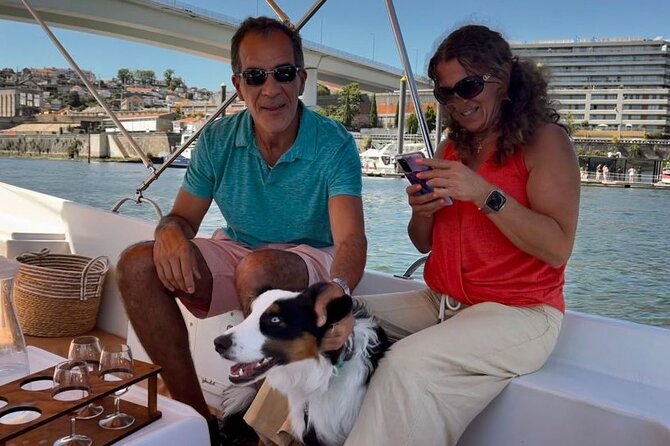
The cruise also passes Alfândega, the former customs building beside the Douro. Its neoclassical façade recalls the time when goods entering and leaving Porto were checked and taxed here.
Today, the building is used for exhibitions and events, but its earlier function helps explain the city’s commercial growth. From the boat, you get a quick architectural view rather than a full visit. If you want to see the interior or attend an event, plan that separately.
I like this stop because it adds substance to the wine tasting. You are not simply drinking port because it is a local specialty. You are seeing part of the riverfront system that supported Porto’s trade.
The glass gazebo and the city gardens
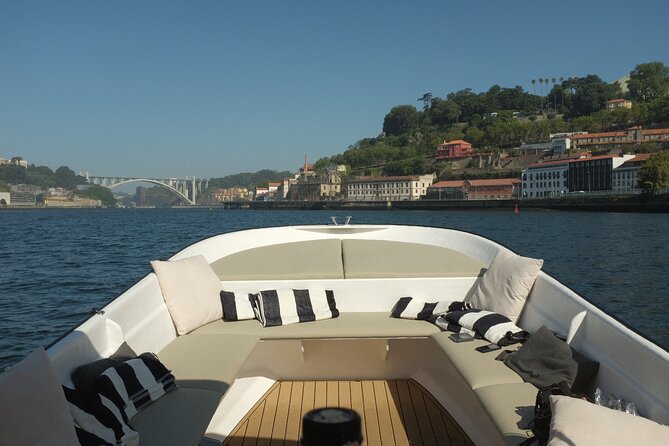
One stop takes in a 19th-century glass gazebo set in gardens above the river. Its glass structure and elevated position offer wide views over the Douro and Porto.
This is a gentler part of the route. The gardens provide a contrast to the stone façades and working riverfront, and the gazebo is a pleasing detail to spot from the water. You will not have time for a leisurely garden walk during the cruise, but the guide’s explanation can help you add it to a later walking plan.
The view is the real point. If you enjoy seeing a city from several heights, this cruise works well because the boat gives you the low river angle while the gazebo and hillside gardens frame Porto from above.
Arrábida Bridge and the turn toward the coast
The final major bridge is the broad arch bridge completed in 1963. It connects Porto and Gaia and remains an important transport route. Its clean arch has a different look from the older iron bridges, so the sequence gives you a quick lesson in changing bridge design.
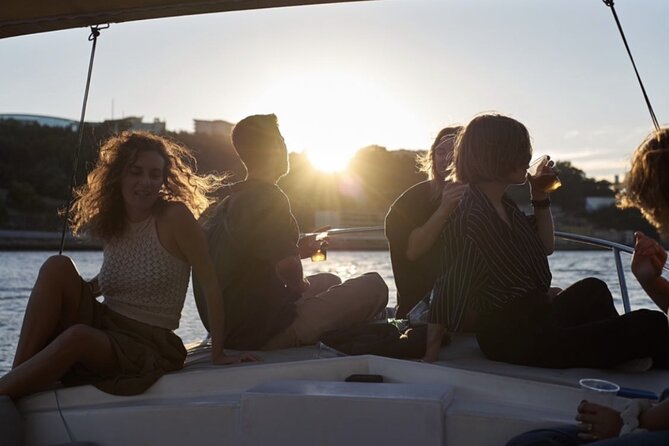
The boat travels along a calm stretch of the Douro toward the Atlantic before returning to the marina. Timing can shape the mood. A departure around 5:15 p.m. may give you excellent city and bridge photographs before a 7 p.m. sunset, while an earlier sailing offers brighter detail. Sunset itself is not guaranteed, so choose the time for your own schedule rather than relying on a particular sky.
The route is scenic, but wind and rain can change the experience quickly. A rainy cruise can still be fun with a cheerful crew, though you should dress for conditions and avoid treating the boat as a dry indoor attraction.
Three wines and a very small snack plate
The tasting is a central part of the outing, not an afterthought. You generally sample three wines: vinho verde, white port, and red port.
Vinho verde brings a fresh contrast to the sweeter port wines. White port can be very sweet, while red port has a fuller, warmer character. The tasting gives you a compact introduction to different Portuguese styles without requiring a separate cellar visit.
The food is modest but local. Expect almonds, dried figs, and small pieces of dark chocolate, with portions described as light. These pairings work well with the wine, but they will not replace a meal. I would eat before boarding or plan dinner afterward, especially if you do not drink on an empty stomach.
Water was not always offered automatically, so ask if you want some. This is a small point, but it matters during a two-hour outing that includes several tastings.
How the small boat changes the experience
A small boat makes the cruise feel social and personal. The crew can speak directly with you, answer questions, take photographs, and adjust the tone to the group. Several people described the atmosphere as close to a private charter, and that is the right expectation when the boat is limited to eight.
The tradeoff is space. You will not have the room, facilities, or multiple viewing areas found on a large vessel. There is no toilet, and the compact seating may feel less comfortable if you prefer to spread out.
The crew receives the strongest praise for making the ride enjoyable. Names vary by departure, but the pattern is clear: the best part is often the combination of captain and guide. They explain the sights, pour the wine, keep the conversation moving, and sometimes add a game or playful activity.
The quality of commentary can vary. One account found little information and felt the outing was mainly a boat ride and tasting. That is worth keeping in mind if detailed guiding is your main reason for booking. The experience is at its best when you ask questions and engage with the crew.
Is $48.37 good value for two hours?
At $48.37 per person, this is not the cheapest way to see the Douro. You are paying for a small group, a captain, live commentary, three wine samples, snacks, and the convenience of not arranging transport or a boat yourself.
I think the price is fair if you value personal service. A large cruise may give you more room, but it will not offer the same level of conversation. A private charter would cost far more, so this sits in a useful middle ground.
The value is weaker if you want a substantial meal, a long trip outside Porto, or a full port-cellar tour. In that case, use the money for a cellar visit or a longer Douro excursion. For a relaxed introduction to Porto from the water, the two-hour format keeps the cost and time commitment under control.
The experience is recommended by 97 percent of people who booked it and carries a 4.9 rating from 601 reviews. Those figures suggest a strong record, but they should not hide the practical limits: light food, no toilet, weather dependence, and occasional variation in the amount of commentary.
Who should book this Douro cruise?
I would choose this cruise for a first visit to Porto, especially if you want an easy way to see the riverfront before exploring on foot. It also suits couples, families, solo visitors, and friends who like meeting a few other people rather than sitting anonymously on a large boat.
Wine fans will enjoy the three-style tasting, while photographers will appreciate the bridges and city views. It is also a good choice for anyone who has spent a day walking Porto’s hills and wants two quiet hours with the scenery doing the work.
I would think twice if you need a bathroom close by, dislike small boats, want a full meal, or need guaranteed weather. The marina location also requires a little planning. Free cancellation is available up to 24 hours before the start time, while poor weather can lead to a new date or a full refund.
FAQ
Where does the Douro River cruise start?
It starts at Boating Porto, Marina do Freixo, N108, 4300-316 Porto, Portugal.
Where does the cruise finish?
The activity ends back at the same meeting point, Boating Porto Marina do Freixo.
How long does the cruise last?
The cruise lasts approximately two hours.
How many people can join the boat?
The stated maximum is eight travelers. One account reported ten people onboard, so confirm the group size if that detail is important to you.
Which wines are included?
The tasting includes vinho verde, white port, and red port.
What snacks are served?
The snacks include local almonds, dried figs, and small amounts of dark chocolate. They are light snacks, not a meal.
Is there a toilet on the boat?
No. The boat does not have a toilet.
What happens if bad weather cancels the cruise?
If poor weather causes cancellation, you will be offered a different date or a full refund. You can also cancel for a full refund if you do so at least 24 hours before the start time.
Should you book it?
Book this cruise if you want Porto’s bridges, riverfront, and wine culture in one friendly two-hour outing. The small boat, capable hosts, and three tastings give it more character than a standard sightseeing ride.
Skip it if you need a bathroom, a full lunch, or a trip into the vineyard country beyond the city. For most visitors, though, the combination of calm water, sharp city views, port wine, and an intimate group makes $48.37 a sensible way to get your bearings and enjoy Porto from its golden river.
More Wine Tours in Porto
- Douro Valley: Wine Tour with Lunch, Tastings & River Cruise
★ 4.6 · 6,081 reviews - Douro Valley: Historical Sites, Wine Experience, Lunch & Cruise
★ 5.0 · 5,133 reviews - Authentic Small Group Douro Wine Tour with Lunch & River Cruise
★ 5.0 · 4,775 reviews - Porto: Cálem Cellar Tour, Fado Show & Wine Tasting
★ 4.4 · 3,530 reviews
Recently reviewed around Porto
- Bridges Cruise with World of Discoveries or Sunset Option★ 4.0 · 219 reviews
- Porto Card Walker (1, 2, 3 or 4 Days)★ 3.4 · 135 reviews
- Porto: 6 Bridges Yacht Cruise with Local Wine & Snacks★ 5.0 · 399 reviews
- Porto: 5D Flight over de City for all family.★ 4.0 · 281 reviews
- Porto:Aveiro, Cruise, Costa Nova & Capelha da Pedra Full Day★ 4.5 · 434 reviews
- Porto Private E-Bike Tour: Douro River, Parks & Beaches★ 4.7 · 104 reviews
- Porto: 3-Hour Walking City Tour & Lello Bookstore Visit★ 4.7 · 99 reviews
- Port Wine class with 3 or 5 Port tasting and pairings★ 4.9 · 441 reviews
Douro Valley Day Trips, compared.
Douro Valley w/ Boat Tour, Wine Tasting & Lunch
Read our review →
Complete Douro Valley Wine Tour with Lunch, Wine Tastings and River Cruise
Read our review →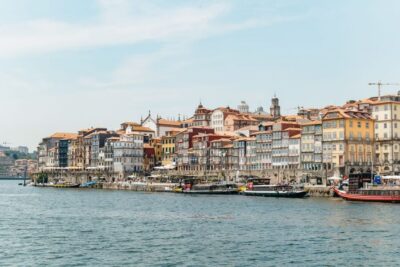
Wine Tour with Lunch, Tastings & River Cruise
Read our review →
Guided Tour by Tuk-Tuk & Optional Douro River Cruise
Read our review →
Historical Sites, Wine Experience, Lunch & Cruise
Read our review →
Authentic Small Group Douro Wine Tour with Lunch & River Cruise
Read our review →
Browse the lists this tour appears in