Reviewed · GUIDED
Loulé: St. Barbara Art Collection w/Guided Salt Mine Tour
Deep beneath Loulé, a working rock-salt mine becomes an unusual gallery. At 230 meters below the Algarve, you’ll see religious art, hear miner songs, and then walk through huge underground chambers formed more than 230 million years ago. It’s an unexpected way to spend part of a day in southern Portugal.
I especially like the contrast between the two halves: the Saint Barbara collection gives the visit a human and spiritual side, while the mine tour explains geology, work, and the local economy. I also like that the art is explored at your own pace before the live guide leads you through the salt tunnels. The main drawback is the descent in a small cage, which can feel tight for some people, and the experience is not suitable for anyone with claustrophobia.
In This Review
- Key points to know before booking
- Why an Algarve salt mine makes a good half-day outing
- The descent to 230 meters below Loulé
- Saint Barbara’s story told through art and music
- Klaus Zylla’s 12 bold paintings
- Putting on the helmet and entering the mine
- What the 1.3-kilometer route explains
- The quiet, industrial atmosphere underground
- How the guides shape the experience
- Who should book this Loulé experience
- Practical details that affect your choice
- Should you book the Saint Barbara salt mine tour?
- FAQ
- How far underground does the tour go?
- How long does the activity last?
- What languages are available?
- What equipment is included?
- What should I wear and bring?
- Is the tour suitable for children and wheelchair users?
Key points to know before booking
- 230 meters underground: You descend below central Loulé in a small lift cage before entering the exhibition and mine.
- Two very different art displays: One focuses on Saint Barbara’s life and legacy, while Klaus Zylla’s 12 paintings offer a bold, modern interpretation.
- A 1.3-kilometer mine walk: The guided route passes through lit chambers and ancient rock formations.
- Strong live guiding: Tours run in Portuguese and English, and the guide explains the geology, mining methods, and importance of salt.
- Useful equipment is supplied: You receive a helmet, flashlight, and reflective vest for the mine section.
- Best for curious adults and older children: Children under six cannot join, and closed-toe shoes are required.
Why an Algarve salt mine makes a good half-day outing
The Algarve is usually sold through beaches, cliffs, and sunny outdoor stops. This experience gives you something quite different. Instead of looking across the coast, you go below a city and see the material that helped shape a local industry.
At $35 per person, the price is fair for a 2.5 to 3-hour activity. It includes entry to both art displays, the mine entrance, the guided walk, and safety gear. You are paying for more than a short gallery visit, but less than many full-day excursions that include transport and meals.
That last point matters. Hotel pickup and drop-off are not included, and neither are food or drinks. You need to make your own way to Rocksalt Mine Tour, Mina de Sal-Gema de Loulé. If you are already visiting Loulé or have a car, the price makes good sense. If you need a taxi from another Algarve resort, add that cost before comparing it with other day trips.
The underground setting also makes this a useful rainy-day choice. One booking on a wet February day turned into an especially practical outing, and the mine’s enclosed setting means the weather above ground matters less once you start the tour.
More Algarve trips worth a second look
- Benagil: Guided Kayaking Tour to the Benagil Cave
★ 4.7 · 3,135 reviews - Lagos: Ponta da Piedade Rock Formations Guided Boat Tour
★ 4.9 · 2,290 reviews - Benagil: Benagil Caves and Secret Spots Guided Kayaking Tour
★ 4.4 · 1,840 reviews
The descent to 230 meters below Loulé
The visit begins at the mine meeting point, followed by a descent of about 230 meters. The lift is described as a small cage, with one account comparing its size to a phone booth and noting that seven people may share it.
You should know this before you book. The ride is not presented as a scenic elevator trip. It is functional access to a mine, and the limited space may be uncomfortable if you dislike confined areas. The experience is specifically unsuitable for people with claustrophobia and wheelchair users.
Once you reach the bottom, the setting changes quickly. The narrow lift ride gives way to broad underground passages and lit chambers. That contrast is part of the appeal: the arrival can feel cramped, but the mine itself is reported to have spacious galleries.
The mine is ancient in geological terms. Some formations date back more than 230 million years, giving the guide plenty to explain before you even get to the human story of mining. You are not simply walking through a dark hole in the ground. You are seeing layers of rock salt shaped by very old natural processes and later worked for practical use.
Saint Barbara’s story told through art and music
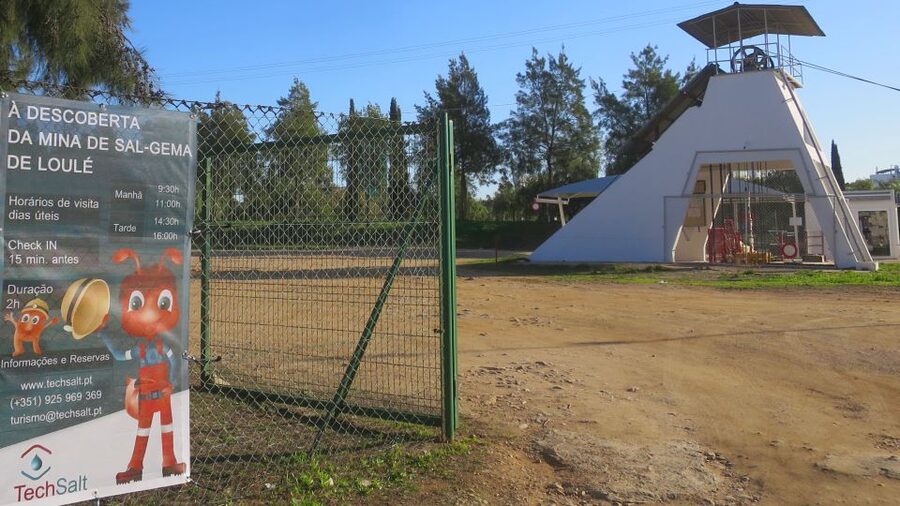
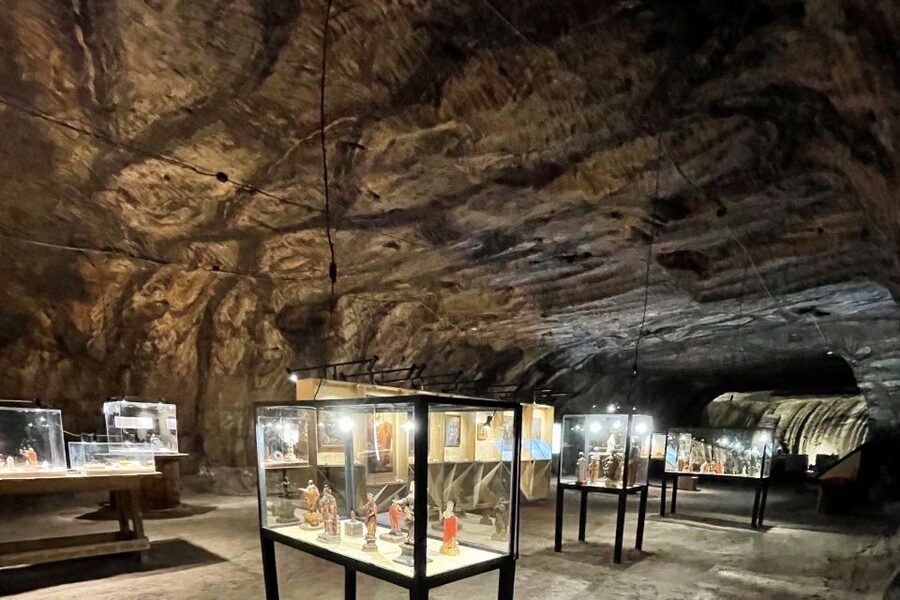
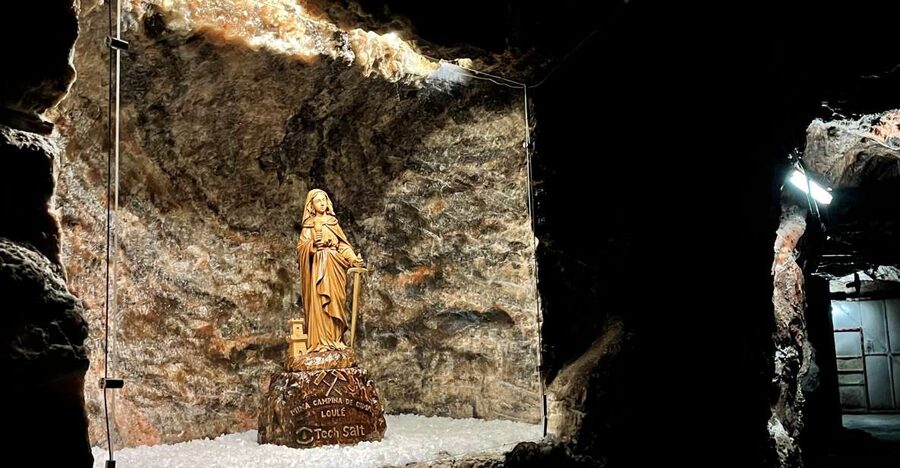
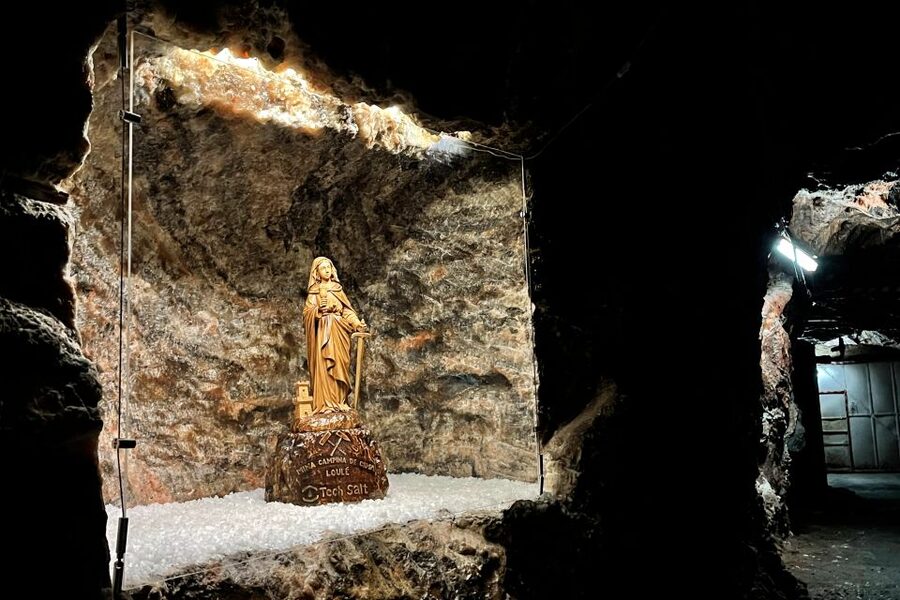
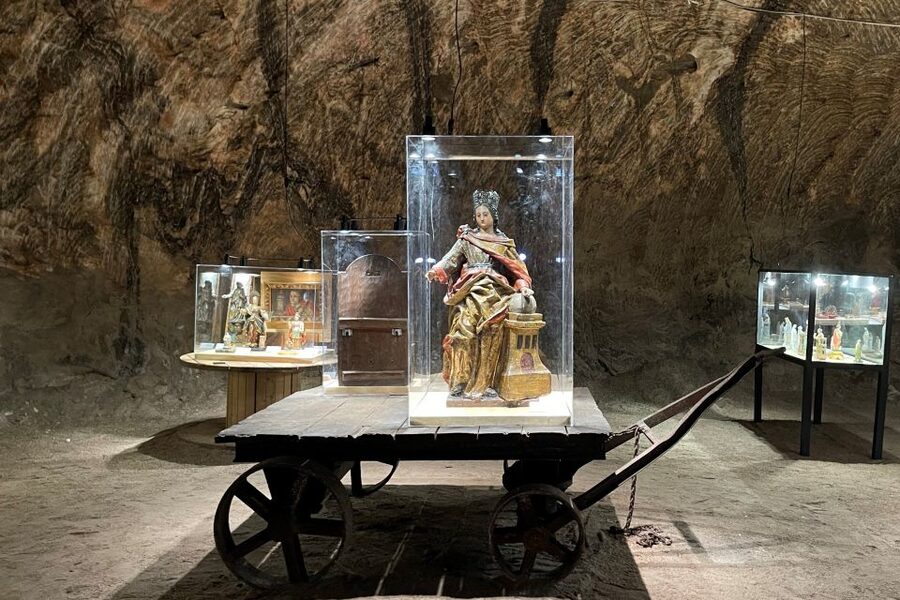
The first exhibition is dedicated to Saint Barbara, the patron saint of miners. The collection presents her life and legacy through artworks, with some pieces dating back hundreds of years.
This part of the experience works best if you take your time. It is not a rapid walk past displays before the mine begins. You can move through the exhibition at your own pace and listen to songs associated with miners. The music helps connect the religious subject to the people who once worked, or still work, in dangerous underground conditions.
You do not need a strong background in religious art to get something from it. The exhibition provides a cultural frame for the mine itself. Saint Barbara is not an unrelated subject placed in an unusual room. Her role as miners’ patron makes sense in a place where underground work has shaped local life.
The collection also adds a quieter pause before the more active mine walk. You can look closely at the pieces, consider how Saint Barbara has been represented over time, and then compare those older traditions with the contemporary work that follows.
Klaus Zylla’s 12 bold paintings
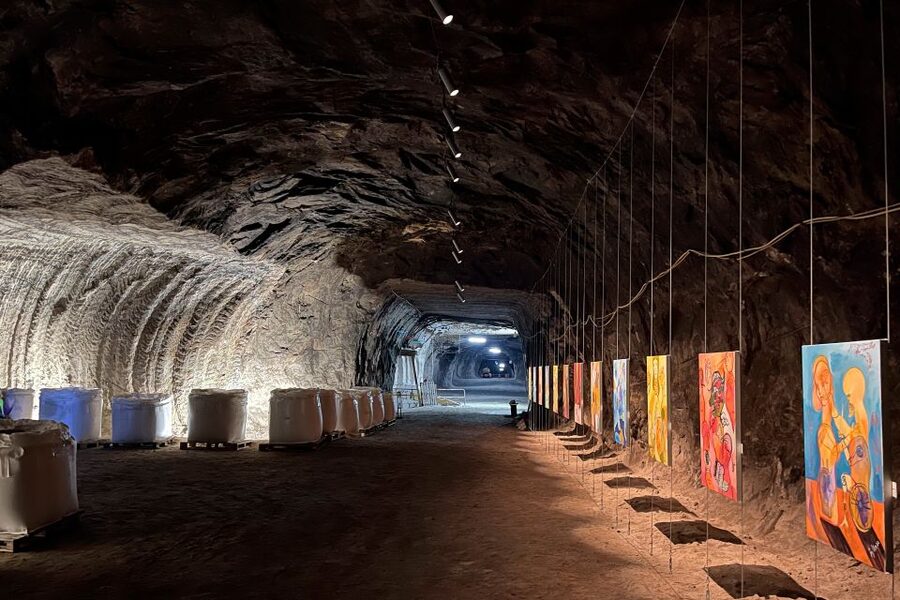
The second display presents 12 paintings by Klaus Zylla. These works offer a modern view of Saint Barbara’s life, using warm colors, strong shapes, and provocative motifs.
This is likely to be the more immediate exhibition for visitors who prefer contemporary art. You do not get a simple historical display repeated in two rooms. Instead, the second collection changes the mood and gives the familiar story a more personal, modern treatment.
The art is particularly effective because it sits underground. Bright color and forceful shapes have a different effect in a mine than they would in a conventional white-walled gallery. The rock around the exhibition keeps reminding you that Saint Barbara’s story is tied to real working conditions, not just religious imagery.
You explore this section at your own pace, too. That makes the art portion flexible, though the total visit still depends on the group’s mine-tour schedule. If you enjoy reading, looking closely, or listening to the songs, avoid rushing through the displays.
One practical point: the information provided does not identify individual guides by name. What matters more is the language choice. Live guiding is available in Portuguese and English, so select the option that lets you follow the explanations about the art and mine clearly.
A different kind of day out, same corner of Portugal:
- Albufeira: 2.5-Hour Benagil Caves & Dolphin Watching
★ 4.6 · 10,710 reviews - Portimão: Benagil Caves Speed Boat Tour with Sunset Option
★ 4.8 · 9,329 reviews - Portimão: Benagil Sea Caves Speedboat Adventure Tour
★ 4.8 · 6,546 reviews - Albufeira: Benagil Caves & Dolphin Watching Speed Boat Tour
★ 4.6 · 6,316 reviews
Putting on the helmet and entering the mine
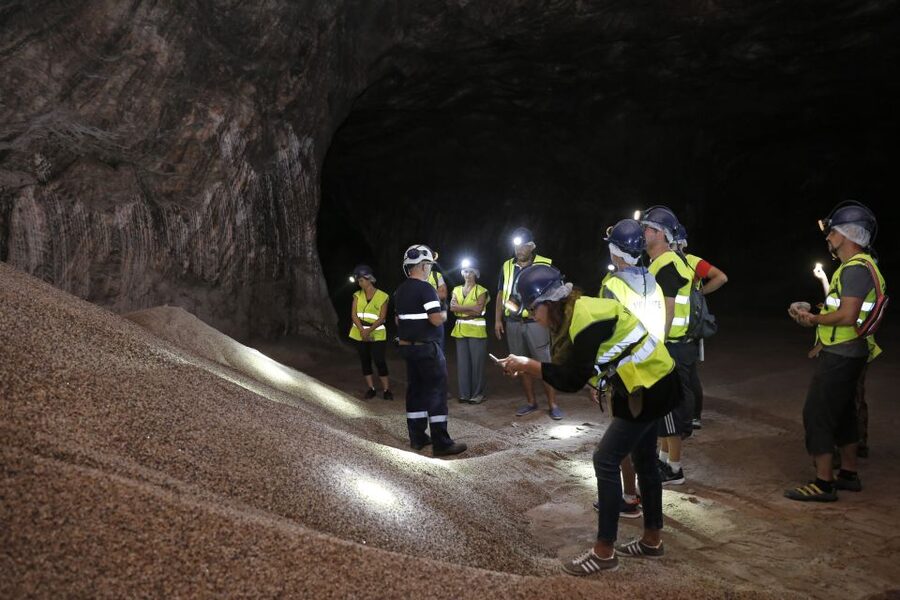
After the exhibitions, you receive a helmet, flashlight, and reflective vest. These are included in the price, so you do not need to bring special mine equipment.
You should bring comfortable clothes and closed-toe shoes. That advice is worth taking seriously. The route covers 1.3 kilometers on foot, and this is not just a seated presentation. Comfortable footwear will make the walk easier, while a closed toe gives you basic protection in an industrial setting.
The flashlight adds to the feeling that you are entering a working underground environment, even though the passages are lit. The reflective vest helps you remain visible in the mine and makes the group easier to manage.
The mine tour is guided rather than self-led. That is important because the most interesting parts are not only the chambers themselves. The guide explains how the salt formed, how mining changed over time, and why the mine matters to Loulé and the surrounding region.
What the 1.3-kilometer route explains
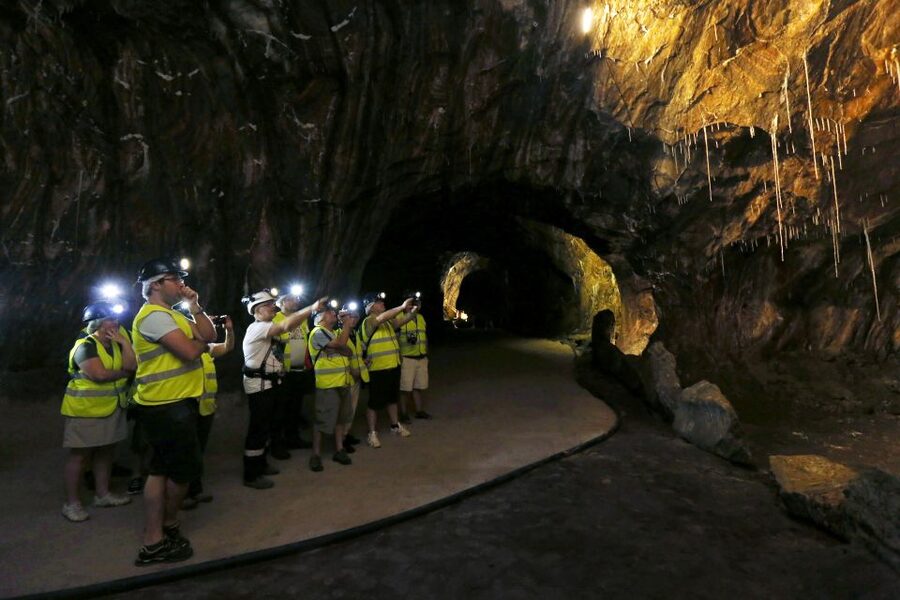
The walking tour covers a substantial underground route, but the exact pace will depend on the guide and group. You pass through large chambers and ancient rock formations while learning about regional geology.
The geology lesson gives the visit lasting value. Without it, the salt would be little more than a striking visual detail. With the explanation, you begin to understand why the rock appears as it does and how such deposits fit into the wider story of the region.
The guide also covers the evolution of rock-salt mining. This makes the mine feel connected to working life rather than preserved only as a curiosity. You learn how extraction developed and why mining has had economic weight in the area.
The worldwide role of salt is part of the discussion as well. Salt is familiar and inexpensive in everyday life, so it is easy to forget how important it has been for food, trade, and industry. Hearing about its wider use puts this one Algarve mine into a larger context.
The strongest praise for the experience is directed at the guides. Visitors consistently describe the explanations as clear, well judged, and engaging. One person noted that the information was delivered at exactly the right level, which is useful if you want substance without a technical lecture.
The quiet, industrial atmosphere underground
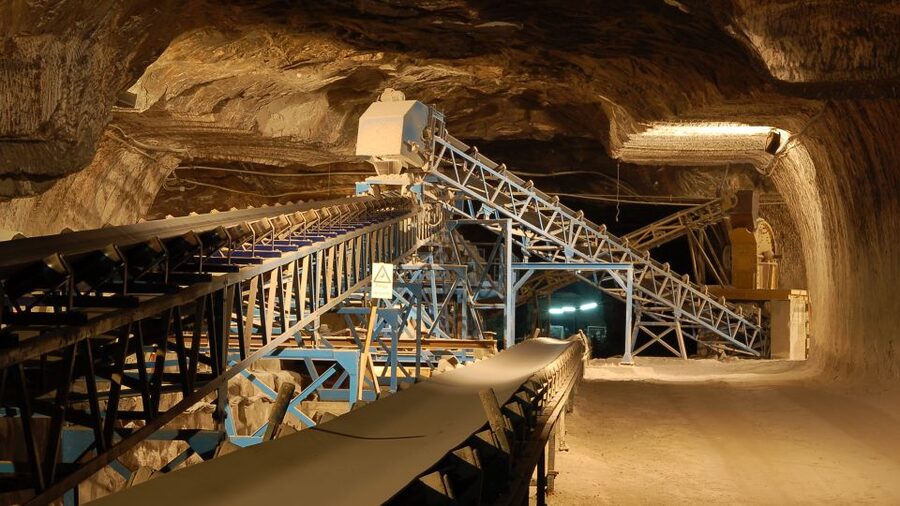
The mine can feel surprisingly peaceful. One visit took place around lunchtime, when mining activity was quiet, leaving the group alone in the underground space. That stillness may appeal to you if you like atmospheric places, though it also means the experience does not feel like a staged entertainment attraction.
The chambers are lit, but the underground setting remains present. You are surrounded by rock, industrial history, and the awareness that this is a mine rather than a standard museum. Some people will find that compelling. Others may prefer a more polished, conventional attraction.
The small lift is the one moment most likely to test your comfort. The passages below are much roomier, but you still need to be comfortable knowing that you are far below the surface. If confined spaces make you anxious, choose a different Loulé activity.
How the guides shape the experience
A good guide makes this tour work. The mine itself is visually unusual, but geology and extraction methods can be hard to understand without clear explanation.
The guiding here is available in Portuguese and English. The strongest comments focus on guides who were personable, clear, and able to explain the subject without overwhelming the group. That is especially helpful because the activity combines art, religion, music, geology, industry, and local economics.
You should expect a live guide for the mine section, while the two exhibitions are explored at your own pace. That balance suits different interests. You can spend longer with the art if you enjoy visual culture, then rely on the guide for the technical side of the mine.
The experience seems to work well for mixed groups because the information is pitched at a general level. You do not need to be an art specialist or geology enthusiast. Curiosity is enough.
Who should book this Loulé experience
I would recommend it to you if you want an Algarve outing that goes beyond the usual coastal stops. It is a good fit for adults, older children, museum fans, amateur geologists, and anyone interested in how a community’s economy grows around a natural resource.
It also suits a rainy day particularly well. The mine and exhibition spaces are underground, and the activity gives you several hours of structured sightseeing without relying on good weather.
You may want to skip it if you dislike enclosed lifts, cannot walk 1.3 kilometers, or need wheelchair access. Children under six are not allowed. You should also avoid sandals and open shoes.
The art section will appeal most to people who enjoy a mix of older religious work and modern painting. The mine section will be the main draw for anyone interested in geology, industrial sites, or unusual places that are not found in a standard city tour.
Practical details that affect your choice
The advertised duration is 2.5 to 3 hours. That is long enough to feel worthwhile but short enough to fit into a day that includes other Loulé plans. Check the available starting times when booking, since the schedule can affect your route around town.
There is no hotel transfer, so plan your own transport to Mina de Sal-Gema de Loulé. Bring a camera if you want photographs, but remember that the underground setting and group movement may limit how long you can stop.
The provider includes a helmet, flashlight, and reflective vest. Food and drinks are not supplied, so handle those before or after the visit rather than expecting a refreshment break underground.
Free cancellation is available up to 24 hours before the activity for a full refund. You can also reserve now and pay later, which helps if your Algarve schedule is still changing.
Should you book the Saint Barbara salt mine tour?
Book this tour if you want a thoughtful, unusual Algarve experience that combines art with a real underground mine. The best parts are the sharp contrast between Saint Barbara’s centuries-old story and Klaus Zylla’s modern paintings, followed by the broad salt chambers and clear explanations from the guide.
The choice is less convincing if you want a relaxed attraction with no confined spaces or walking. The lift can feel tight, and the mine setting is not suitable for everyone.
For most visitors who are comfortable underground, $35 is a reasonable price for three hours of art, music, equipment, guiding, and access to a place you cannot experience from the surface. It gives you a different view of Loulé, one shaped by salt, work, faith, and geology.
FAQ
How far underground does the tour go?
The tour descends about 230 meters below the city of Loulé.
How long does the activity last?
The experience lasts approximately 2.5 to 3 hours.
What languages are available?
Live guiding is available in Portuguese and English.
What equipment is included?
You receive a helmet, flashlight, and reflective vest for the mine tour.
What should I wear and bring?
Bring comfortable clothes, closed-toe shoes, and a camera if you want to take photographs.
Is the tour suitable for children and wheelchair users?
Children under six are not permitted, and the activity is not suitable for wheelchair users or people with claustrophobia.
Recently reviewed around Algarve
- Portimao: Boat trip to the Benagil Cave★ 4.8 · 51 reviews
- Portimao: Luxury Sail-Yacht Cruise with Sunset Option★ 4.8 · 126 reviews
- Portimão: Small Group Kayak Cave and Cliff Tour★ 5.0 · 44 reviews
- Portimão: Benagil Caves Speedboat and Kayak Guided Tour★ 4.7 · 198 reviews
- Portimao: Half-Day Sailing Yacht Cruise to the Benagil Caves★ 4.8 · 44 reviews
- Portimão: Benagil Grottoes Boat Cruise★ 4.9 · 188 reviews
- Portimão: Benagil Caves & Golden Coast Eco Catamaran Tour★ 4.9 · 187 reviews
- Portimão: Silves & Arade River History Tour on a Solar Boat★ 4.8 · 148 reviews
Guided, compared.
Guided Tour by Tuk-Tuk & Optional Douro River Cruise
Read our review →
Best of Lisbon Small-Group Guided Walking Tour
Read our review →
Benagil: Guided Kayaking Tour to the Benagil Cave
Read our review →
City Highlights 3-Hour Guided Electric Bike Tour
Read our review →
Fátima, Nazaré, Batalha, and Óbidos Guided Tour
Read our review →
Guided Tour to Sintra, Pena, Regaleira, Cabo da Roca and Cascais
Read our review →