Reviewed · ALGARVE TOURS
Cork Factory Tour
Cork is not mined, molded from plastic, or cut from a living tree. It is the bark of Portugal’s cork oak, carefully removed so the tree can keep growing. This short visit puts that process inside a working factory, where you can watch cork being sorted, prepared, checked, and packed.
I like the clear explanations from the guides and the chance to see real workers handling the material. I also like the shop, not simply as a souvenir stop, but as a quick lesson in how cork has moved beyond wine stoppers into bags, wallets, jewelry, and other fashion goods.
The main consideration is the setting. This is a small working factory, not a large museum with elaborate displays, and some activity depends on the season. The open factory floor can also make the guide hard to hear in a large group, so arrive early and stay close.
In This Review
- Key points to know before you go
- Why cork makes this Algarve visit worthwhile
- Arriving at Eco-Cork Factory near São Brás de Alportel
- The opening presentation explains the cork oak
- Inside the working factory, bark becomes a usable material
- What the quality checks tell you about cork products
- The cork shop shows how far the material has traveled
- How long the 50-minute format feels
- Who will get the most from this factory visit
- Practical advice for getting more from the visit
- Should you book the Cork Factory Tour?
- FAQ
- Where is the Cork Factory Tour held?
- How long does the tour last?
- What languages are available?
- Is transportation included?
- Is the factory wheelchair accessible?
- Can I cancel the booking?
Key points to know before you go
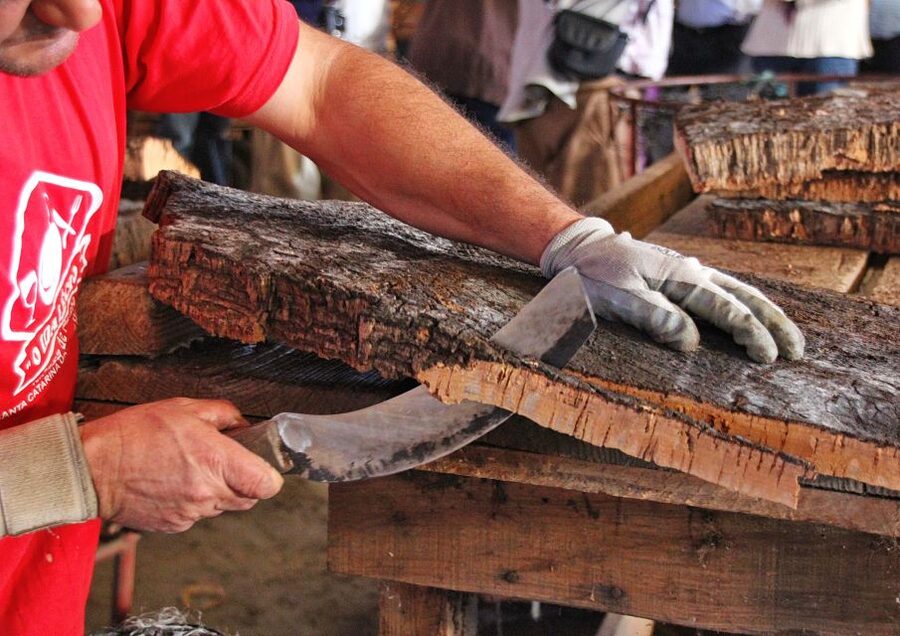
- Cork is processed by hand more than you might expect: You may watch an artisan shape pieces of bark and see workers carry out careful quality checks.
- The visit covers the whole chain: You learn about cork forests, harvesting, preparation, grading, processing, packing, and finished products.
- The factory is near São Brás de Alportel: The meeting point is Eco-Cork Factory in Mesquita Baixa, outside the main tourist centers.
- The shop is part of the appeal: Cork fabric is used for fashion accessories, with products in different qualities and price ranges.
- The tour is short but well filled: Plan on 50 minutes, with some sessions lasting close to an hour.
- English and Portuguese are available: Guides such as Irina, Angelina, Belinda, and Angela have led sessions, though sound can be an issue in a large group.
Why cork makes this Algarve visit worthwhile
The Algarve is usually sold through beaches, cliffs, and resort towns. This outing gives you a look at a quieter part of Portugal’s economy, one tied to agriculture, craft, and local manufacturing. Cork oak forests cover more than 720,000 hectares in Portugal, so the material is not a tiny niche product. It is part of the country’s working identity.
I find the basic idea especially appealing: the tree survives the harvest. Cork is the outer bark, and the oak continues growing after the bark is removed. That fact gives the factory visit more meaning than a simple demonstration of how a souvenir is made.
You will also see why cork is useful. It is light, flexible, insulating, and suited to many purposes. The tour connects those qualities to actual objects, from familiar wine closures to newer products made from cork fabric.
At $20 per person, the tour is priced as an easy add-on rather than a major day trip. The value depends on your interest. If you want a long museum visit or a full forest walk, this will feel limited. If you want a focused look at a distinctive Portuguese industry, the price is reasonable, especially when you can ask questions and see the work up close.
Other Algarve days travellers weigh against this one:
- Albufeira: 2.5-Hour Benagil Caves & Dolphin Watching
★ 4.6 · 10,710 reviews - Portimão: Benagil Caves Speed Boat Tour with Sunset Option
★ 4.8 · 9,329 reviews - Portimão: Benagil Sea Caves Speedboat Adventure Tour
★ 4.8 · 6,546 reviews
Arriving at Eco-Cork Factory near São Brás de Alportel
The meeting point is Eco-Cork Factory at Mesquita Baixa, 8150-048 São Brás de Alportel. The published coordinates are 37.140003, -7.855236. This is useful because the factory can be tricky to find, particularly if you are following signs rather than navigation.
I would not cut arrival time too close. Five minutes may be enough once you know the building, but a first visit can involve finding the entrance and working out where your group should gather. A little extra time also helps if a coach group arrives at the same time and creates confusion at reception.
You need to think carefully about transport. Faro is not far in regional terms, but direct public transport options are limited. An Uber has worked well for some people coming from Faro, while a rental car gives you the simplest control over arrival and departure. The activity information lists transportation among the inclusions, but the stated meeting point is the factory itself, so confirm exactly what is covered when you book.
The location is wheelchair accessible, which makes this a more practical factory visit than many working industrial sites. Still, the experience takes place in a large open factory space, so ask at booking if you need specific assistance with hearing or positioning.
The opening presentation explains the cork oak
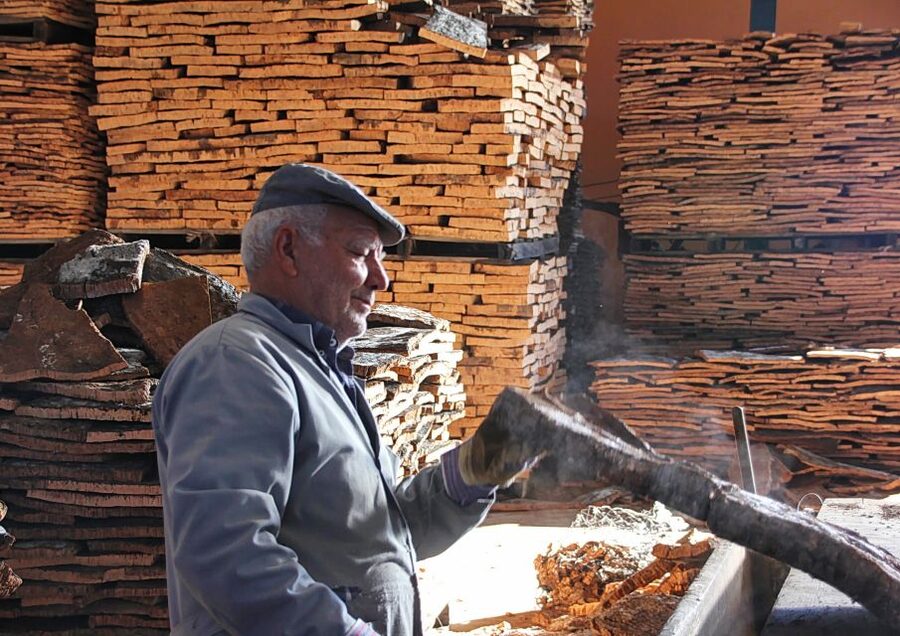
The visit begins with an introductory presentation or video that brings you up to speed before you enter the working areas. This is a smart way to handle the subject. Without some context, piles of bark and machinery can look like a jumble of brown material.
You learn that cork comes from the cork oak and that Portugal is a major producer. The guide explains the connection between the trees, the harvest, and the factory. The result is a useful overview rather than a narrow lesson about wine stoppers.
The guide-led portions are available in English and Portuguese. Several guides have been singled out for clear delivery, including Irina, Angelina, Belinda, and Angela. The exact guide depends on the day, but the best sessions leave plenty of room for questions.
Season matters here. At times of year when harvesting is not taking place, some parts of the process are shown on video rather than seen live. You might not see an actual cork oak tree during the visit either. That is an important limit to understand: this is primarily a factory tour, not a walk through a cork forest.
Inside the working factory, bark becomes a usable material
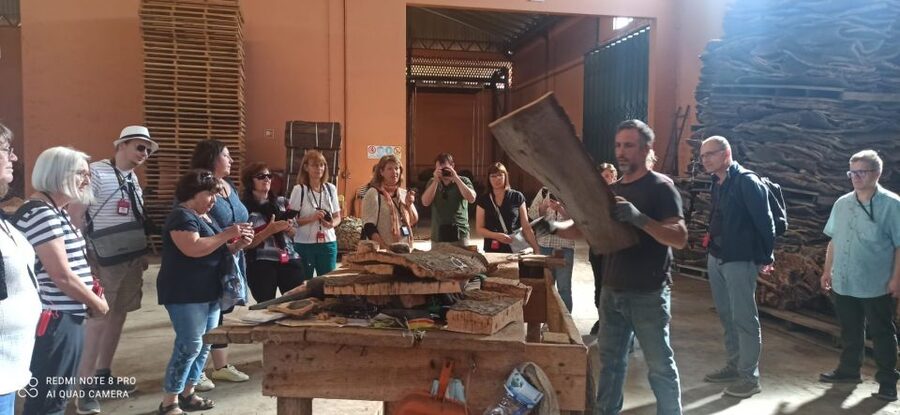
The factory floor is the heart of the experience. You see cork at different stages and follow the broad path from raw bark to prepared material. The guide explains how cork is sorted, treated, checked, and packed.
One of the most interesting parts is seeing how much of the work remains manual. You might expect a modern factory to rely almost entirely on automated equipment. Instead, careful human judgment still matters, especially when workers assess quality and shape pieces for different uses.
In one part of the tour, you may watch an artisan work pieces of bark in front of the group. This gives you a better sense of the material’s texture and flexibility than a finished product ever could. You can also ask questions while the work is taking place, which makes the stop feel more direct and less like watching a sealed production line through glass.
The guide uses samples to show that not all cork is equal. Density, appearance, texture, and intended use affect quality and price. This is helpful in the shop later, because you begin to understand why two cork products that look similar may cost different amounts.
The factory is not huge, and there may not be constant action in every section. I would set your expectations accordingly. You are not watching a nonstop industrial performance. You are seeing a modest working operation where a small number of employees carry out skilled tasks, often with a surprising amount of handwork.
A different kind of day out, same corner of Portugal:
- Albufeira: Benagil Caves & Dolphin Watching Speed Boat Tour
★ 4.6 · 6,316 reviews - Albufeira: Dolphin Watching and Benagil Cave
★ 4.7 · 5,658 reviews - Dolphins Search and Benagil Caves from Albufeira
★ 5.0 · 4,814 reviews - Albufeira: Coastline and Benagil Caves Tour by Catamaran
★ 4.7 · 4,077 reviews
What the quality checks tell you about cork products
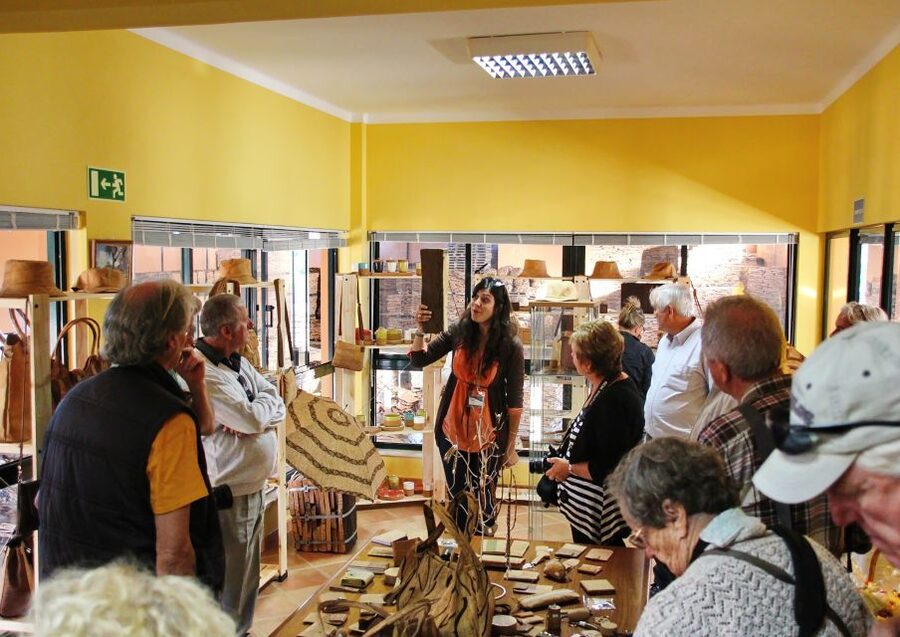
Quality control is one of the less glamorous parts of production, but it is where the tour becomes practical. Cork is a natural material, so each piece can vary. Workers need to judge whether it is suitable for a particular purpose and whether it meets the required standard.
The guide explains how different grades lead to different products. Some pieces may be suited to wine closures, while others can be shaped, laminated, or turned into decorative and fashion items. You begin to see cork as a family of materials rather than one uniform substance.
This also explains the price range in the shop. A low-cost accessory and a more carefully finished bag are not necessarily made from the same grade or construction. I like that the tour gives you enough background to shop with a little more sense.
The industrial setting has one drawback: sound. In a big, open space, machinery and general factory noise can make speech difficult, especially when the group is large. Stay near the guide and position yourself where you can see the demonstrations. A smaller group makes the experience easier, and some sessions are intimate, while others can be crowded.
The cork shop shows how far the material has traveled
After the factory, you visit the cork shop. This is where the traditional material takes a more modern turn. The shelves and displays show cork used in fashion accessories and other finished goods, including items made from cork fabric.
Cork fabric is one of the most eye-catching developments for people who associate cork only with bottles. It can be used for bags, wallets, purses, belts, jewelry, and similar accessories. The shop gives you the chance to compare colors, textures, finishing, and construction in person.
I would treat the shop as part of the educational visit, not an obligation to buy. The products offer a practical way to see the material’s range, and the prices vary according to quality. You may find affordable souvenirs, as well as higher-priced pieces that feel more like serious accessories.
Some visitors have wished they had known about optional workshops, such as making a cork bracelet for an additional fee. Those activities are not part of the standard tour information here, so ask before arrival if a workshop is important to you. It may need separate booking.
The shop is also a good final stop because it lets you revisit what you have learned. After seeing raw bark, manual shaping, and quality checks, a finished cork bag looks less like a novelty and more like the last step in a long chain of work.
How long the 50-minute format feels
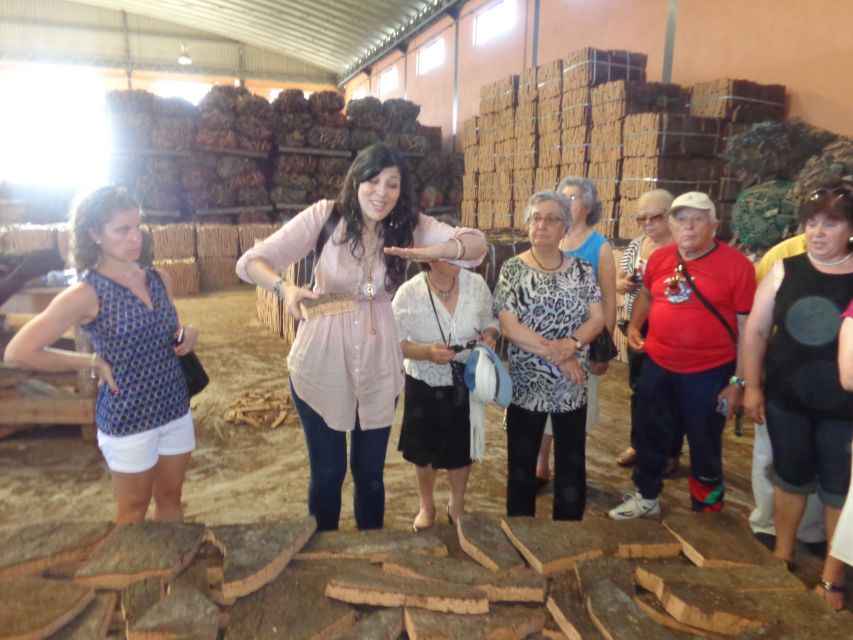
The advertised duration is 50 minutes, though some sessions have run close to an hour. That is enough time for a video or introduction, a factory walk, explanations, questions, and the shop.
The compact format works well for a morning or afternoon in the São Brás de Alportel area. You do not need to give up a full day of sightseeing, and the tour is short enough for people who are only moderately interested in manufacturing.
I would not book it expecting a leisurely factory exploration with unlimited time at every station. The pace is controlled, and the guide has to keep the group moving. Still, the timing is generally sensible because the subject is explained in stages rather than stretched thin.
Questions make a difference. The strongest part of the tour comes when you ask about quality, harvesting, packing, or the uses of different cork types. Guides have handled questions in English and Portuguese, and sessions led by Irina, Angelina, Belinda, or Angela have been especially clear and engaging.
Who will get the most from this factory visit
I recommend this tour to anyone curious about how ordinary products are made. It is especially useful if you are already planning to buy cork goods in Portugal and want to understand the material before spending money.
Families can also enjoy it because the subject is tactile and easy to grasp. Even someone who is not excited about factories may find the manual work and unusual products more interesting than expected. The tour does not require specialist knowledge, and the opening presentation helps newcomers follow along.
It suits people with an interest in sustainability, too, but I would keep the claim measured. The tour explains cork as a natural material and shows how the bark is used, but it is not presented as a full environmental course or a guided forest ecology walk.
Wine enthusiasts may find the visit a useful companion to vineyard experiences, since it explains the source of the familiar stopper. Fashion shoppers, craft fans, and people looking for a distinctively Portuguese gift will have plenty to examine at the end.
You may want to skip it if your schedule is packed, you dislike industrial settings, or you need a detailed outdoor visit to the cork oak forests. The factory is the focus, and seasonal conditions may mean that some harvesting is shown on video rather than in person.
Practical advice for getting more from the visit
Arrive earlier than the suggested five-minute cushion. The factory can be difficult to identify, and reception may be confusing when a bus group is arriving.
Keep close to the guide on the factory floor. This matters most in a large group, where open walls and machinery can swallow up parts of the explanation. If you have hearing concerns, contact the provider before booking and ask about the best arrangement.
Bring questions. Ask how grades differ, which products use cork fabric, how the bark is prepared, and what the workers look for during quality checks. The tour has enough flexibility for questions, and this is where the information becomes useful rather than just interesting.
Allow a little time for the shop after the formal factory portion. You can compare products without rushing, and the displays help connect the raw material to the finished goods.
If you are coming from Faro, check transport before committing. An Uber can work, but availability and return timing can affect your plans. A car is the simplest option when you want to reach the factory without relying on a limited public transport connection.
Cancellation is flexible: you can cancel up to 24 hours in advance for a full refund, and the reserve-now, pay-later option keeps the booking adaptable. The tour is wheelchair accessible, with English and Portuguese available.
Should you book the Cork Factory Tour?
Book it if you want a short, well-priced look at a real Portuguese industry rather than another standard sightseeing stop. The strongest reasons are the manual work, the clear explanation of cork from tree to finished product, and the chance to see how cork fabric becomes modern accessories.
At $20, I consider it good value for a 50-minute visit, especially when you use the guide’s time to ask questions. Just remember that it is a working factory, not a large museum, and that the harvest may not be happening when you visit.
The best plan is to combine it with other stops around São Brás de Alportel and arrive with your own transport arranged. If you do that, this compact visit offers a memorable look at why cork matters in Portugal and why that humble bottle stopper takes more work than it seems.
FAQ
Where is the Cork Factory Tour held?
The tour meets at Eco-Cork Factory in Mesquita Baixa, 8150-048 São Brás de Alportel, Algarve, Portugal. The coordinates are 37.140003, -7.855236.
How long does the tour last?
The stated duration is 50 minutes. Some sessions have lasted close to one hour.
What languages are available?
The tour is available in English and Portuguese. Live guides lead the visit, with an introductory presentation or video also used during the experience.
Is transportation included?
Transportation is listed among the inclusions, but the meeting point is directly at Eco-Cork Factory. Confirm the exact transport arrangements when booking, especially if you are coming from Faro.
Is the factory wheelchair accessible?
Yes. The activity information states that the experience is wheelchair accessible.
Can I cancel the booking?
Yes. You can cancel up to 24 hours in advance for a full refund. A reserve-now, pay-later option is also available.
Recently reviewed around Algarve
- Portimao: Luxury Sail-Yacht Cruise with Sunset Option★ 4.8 · 126 reviews
- Portimão: Small Group Kayak Cave and Cliff Tour★ 5.0 · 44 reviews
- Portimao: Boat trip to the Benagil Cave★ 4.8 · 51 reviews
- Portimão: Benagil Caves Speedboat and Kayak Guided Tour★ 4.7 · 198 reviews
- Portimao: Half-Day Sailing Yacht Cruise to the Benagil Caves★ 4.8 · 44 reviews
- Portimão: Benagil Grottoes Boat Cruise★ 4.9 · 188 reviews
- Portimão: Benagil Caves & Golden Coast Eco Catamaran Tour★ 4.9 · 187 reviews
- Portimão: 2-Hour Dolphin Watching Boat Tour★ 4.7 · 42 reviews
Algarve Tours, compared.

Benagil Caves Speed Boat Tour with Sunset Option
Read our review →
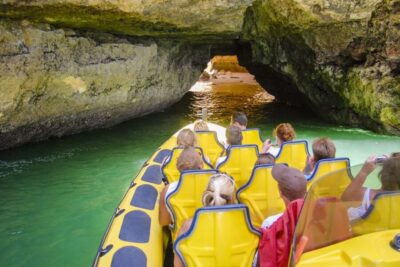
Benagil Caves & Dolphin Watching Speed Boat Tour
Read our review →

Dolphins Search and Benagil Caves from Albufeira
Read our review →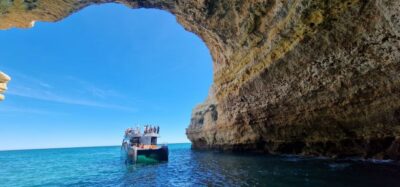
Coastline and Benagil Caves Tour by Catamaran
Read our review →