
Reviewed · DOLPHIN & WHALE WATCHING
Azores Whale Watching Tour – Ponta Delgada
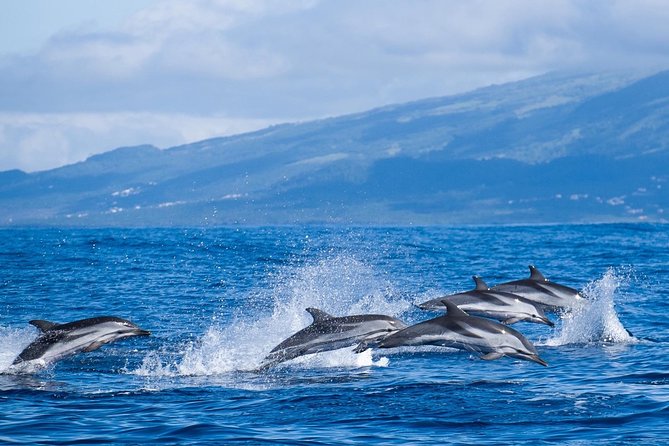
The Atlantic waters off São Miguel can produce a remarkable wildlife show: pods of dolphins, sperm whales, sei whales, humpbacks, and other passing species. This 2 to 3 hour trip leaves Ponta Delgada with marine biologists who adjust the route to recent sightings, rather than follow a fixed coastal circuit.
I like the choice between a thrilling rigid inflatable speedboat and a more settled catamaran. I also like the operator’s clear focus on animal welfare, safety, and useful explanations about the sea life around the Azores. The main drawback is the open Atlantic itself: the ride can be rough, windy, and uncomfortable for anyone prone to motion sickness.
In This Review
- Key points to know before you book
- Why Ponta Delgada is a strong base for whale watching
- Arriving at Marina Pêro de Teive
- The speedboat or the catamaran
- Following the animals into the Atlantic
- What the wildlife sightings can be like
- The guide’s role and the conservation message
- Weather, waves, and possible changes
- What the $78.60 price gets you
- Who will enjoy this outing most
- Should you book the Azores Whale Watching Tour?
- FAQ
- Where does the whale watching tour meet?
- How long does the tour last?
- What animals might I see?
- Is a whale sighting guaranteed?
- Which boat should I choose?
- What happens if the weather cancels the tour?
Key points to know before you book
- More than dolphins may appear: The Azores can produce sightings of sperm whales, sei whales, humpbacks, Bryde’s whales, pilot whales, spotted dolphins, and bottlenose dolphins.
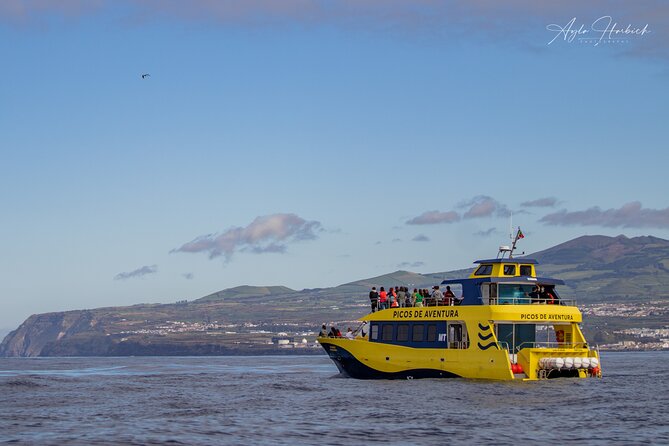
- Choose your boat carefully: The speedboat gets you close to the water and delivers a lively ride. The catamaran has more room, covered shelter, and a toilet.
- The route follows the wildlife: Your exact course is decided after the crew checks recent activity along the southern coast.
- Sightings are protected, not staged: The crew gives animals space and uses the trip to explain conservation as well as identification.
- Morning or afternoon departures help: You can fit this outing around a full day in Ponta Delgada.
- Pack for spray and motion: The provided raincoat helps with wind and water, but seasickness medication may be wise.
Why Ponta Delgada is a strong base for whale watching
The tour starts at Marina Pêro de Teive, on Avenida João Bosco Mota Amaral, in central Ponta Delgada. From here, boats head out into the Atlantic, using observation points along São Miguel’s southern coast and farther offshore when the animals are there.
The Azores sit along important routes used by cetaceans. More than 20 kinds of whales and dolphins have been recorded in these waters, but that does not mean you will see 20 species on one outing. The appeal is the uncertainty. A morning may bring a large pod of common dolphins, while another trip produces a sperm whale or a migratory baleen whale.
I would treat the tour as a wildlife search, not a guaranteed whale performance. The operator promises a full refund if you see neither whales nor dolphins, but seeing dolphins does not mean you will also see whales. That distinction matters, especially if your main goal is a whale tail.
The tour is offered in English, and the guide may also speak other languages. The boat carries marine life experts who help identify what you see and explain local conservation work. That turns the ride into more than a fast trip across the water.
More Dolphin & Whale Watching in the Azores
- From Ponta Delgada: Whale and Dolphin Watching Trip
★ 4.7 · 4,109 reviews - Azores Whale Watching & Islet Boat Tour
★ 4.6 · 2,146 reviews - Azores Whale Watching & Islet Boat Tour
★ 4.5 · 1,059 reviews
Arriving at Marina Pêro de Teive
Plan to reach the Picos de Aventura headquarters 15 to 20 minutes before departure. You check in, receive equipment, and listen to an introduction before boarding. The short briefing lasts about 15 to 20 minutes and covers safety, the likely species, the route, and what to expect at sea.
This beginning is useful because the trip is not a simple sightseeing cruise. You need to know how to move around the boat, where to sit, and how to watch without crowding the rail. The crew also explains that conditions can change and that sightings depend on the animals’ location.
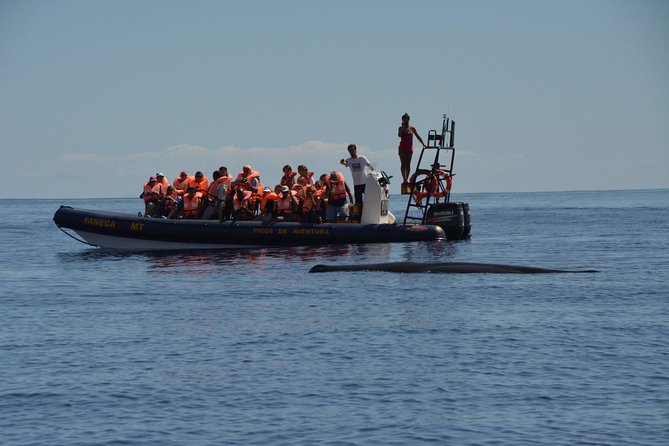
Raincoats and life vests are supplied. Life vests are mandatory on the smaller boats. Bring water and a snack if you need them, since food and drinks are not included.
The marina is near public transportation, but hotel pickup and drop-off are not included. At the end, you return to the same meeting point, so allow time to walk or arrange your onward transport.
The speedboat or the catamaran
The choice of boat shapes the entire experience. It is not a minor booking detail.
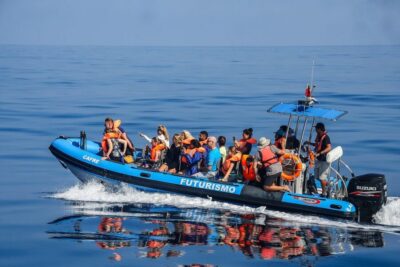
The rigid inflatable speedboat is the more exciting option. It is built for speed and gives you a close-to-the-water view, which can make dolphin encounters feel immediate. You may feel every wave, and the ride can include sharp turns when the crew moves toward a sighting. On a calm day, that adds fun. In rougher conditions, it can leave you wet, tired, or queasy.
The supplied raincoat helps, especially against wind, but it is not a promise that you will stay dry. One particularly practical tip is to leave purses and unnecessary electronics in the available lockers. The spray can be heavy when the boat is moving quickly.
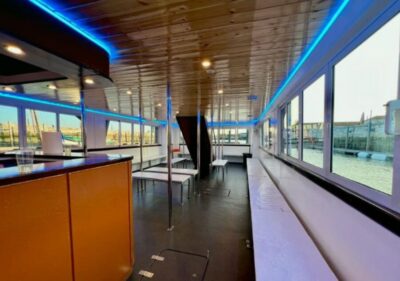
The catamaran is the better choice for comfort. It offers more space, a covered cabin, an open-air upper deck, and a toilet. The waves are usually less noticeable from this larger boat, and families with small children may find it easier to manage.
You can still see dolphins well from the catamaran. A front position on the lower deck can offer a good viewing angle, while the upper deck gives you a wider view of the sea. You lose some of the speedboat’s thrill, but you gain room to shift position and shelter from wind.
If you have motion sickness, I would choose the catamaran and ask a pharmacist or doctor about suitable medication before the outing. The operator may limit children’s participation when weather or sea conditions create safety concerns. Children must be accompanied by an adult.
Following the animals into the Atlantic
After the briefing, the boat leaves the marina and begins the search. The route changes according to recent dolphin and whale activity, so the trip may spend much of its time reaching the best area rather than cruising close to shore.
This is one of the less glamorous parts of whale watching, but it is important to understand it before you go. One reported outing spent most of its three hours reaching the wildlife area. The reward is a better chance of finding animals in their natural setting, but the ride itself may not provide constant action.
Once the crew reaches an observation area, the pace changes. The boat slows or stops, and everyone scans the water for blows, fins, and movement. The biologists help you tell spotted dolphins from bottlenose dolphins and point out the shape and behavior of larger whales.
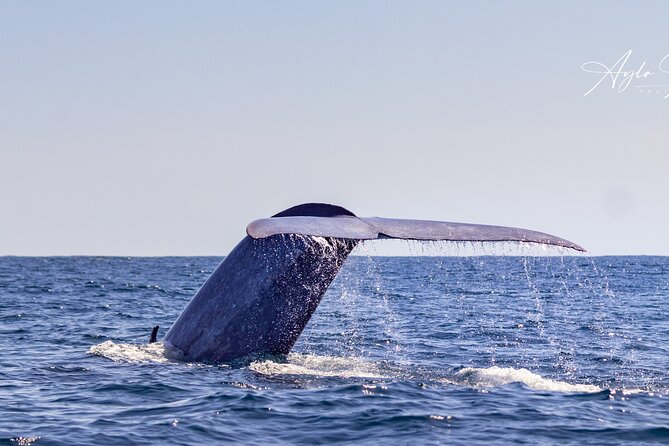
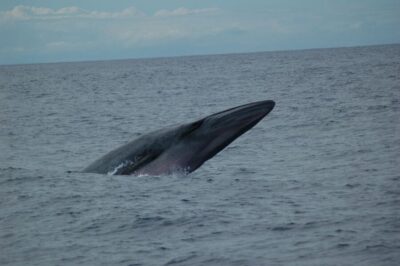
You might see common dolphins, Atlantic spotted dolphins, bottlenose dolphins, pilot whales, sperm whales, sei whales, Bryde’s whales, humpbacks, or other migratory species. Some trips produce several species. Others bring dolphins but no whale. A distant sighting can also be the best available view, since the animals decide where they surface.
The crew’s approach is one of the strongest parts of the experience. The stated priority is safety for people and wildlife, and the boat gives the animals room. That makes the trip feel more responsible than a chase for a close photograph.
More Azores trips worth a second look
- São Miguel Azores: Half-Day Whale Watching Trip
★ 4.5 · 983 reviews - Pico Island: Whale Watching Experience from Lajes
★ 4.9 · 492 reviews - Pico Island: Azores Whale & Dolphin Watching on Zodiac Boat
★ 4.8 · 408 reviews - Horta: University Startup Whale and Dolphin RIB Boat Trip
★ 4.9 · 225 reviews
What the wildlife sightings can be like
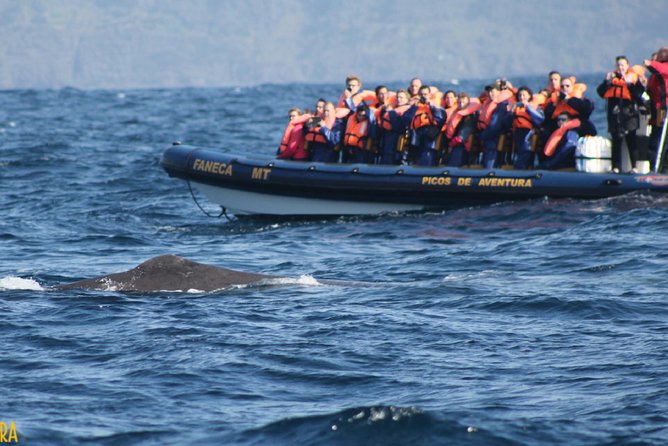
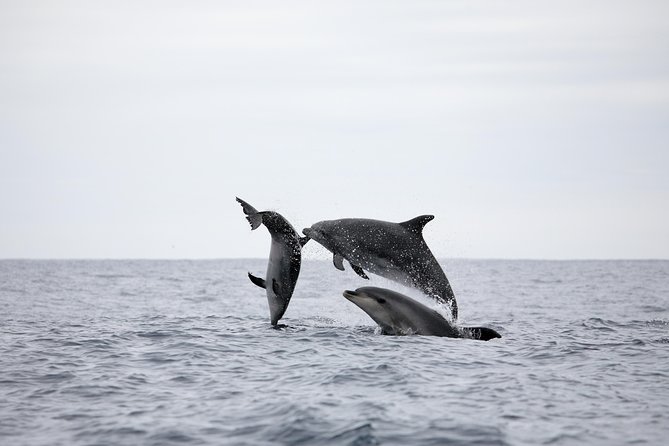
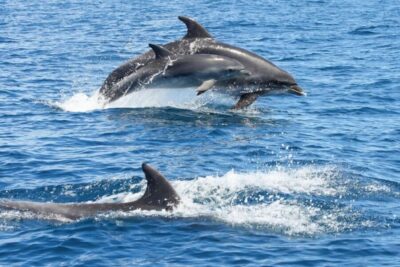
Dolphins are often the most reliable source of action. They may appear in groups, and the boat can sometimes watch them travel or play near the vessel. Seeing several kinds of dolphin in one outing is possible, including the harder-to-spot Risso’s dolphin, whose appearance differs from the more familiar spotted and bottlenose species.
Whales require more patience. A sperm whale may show only part of its body before disappearing again. Baleen whales and migratory species can be difficult to see clearly, especially when the sea is choppy. You may sense a whale nearby, catch a blow, or glimpse a back without getting the perfect tail photo.
That is not a failure of the trip. It is simply the nature of wild animals. Still, expectations matter. If you have already had a close, sustained whale encounter in a place such as Cape Cod, you may find this experience less predictable.
The operator describes the tour as whale and dolphin watching, not whale-only watching. The sighting guarantee applies if you see neither whales nor dolphins, so a day with a large dolphin pod can still count as a successful outing even if no whale appears.
Bring a camera, but keep your eyes on the water too. Wildlife surfaces quickly, and the best moment may be over before you find the right setting. A waterproof phone pouch is a sensible extra, though the tour supplies only the raincoat and life vest listed above.
The guide’s role and the conservation message
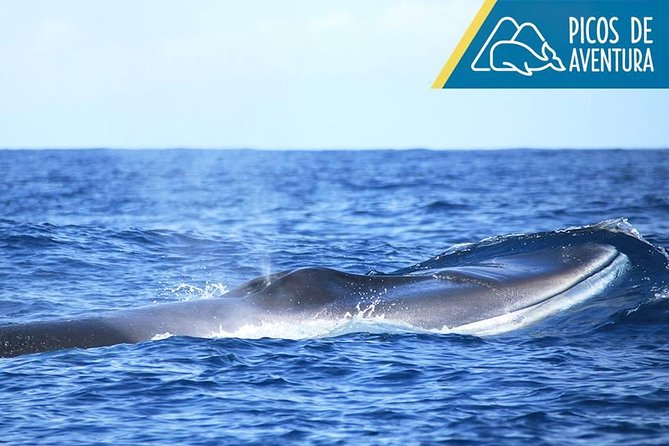
The marine biologists are not there simply to point and shout. Their job is to identify species, explain behavior, and help the boat approach wildlife with care. The strongest outings combine excitement with clear information about the animals and the Azores marine environment.
The introduction also covers local conservation efforts. That context gives the sightings more meaning. You learn that the animals are not props arranged for a tour, and that responsible viewing depends on distance, speed, and patience.
Most feedback about the crew highlights their professionalism, warmth, and enthusiasm for marine life. There was also an isolated complaint about limited explanation on one trip, so the educational quality may depend partly on the guide assigned that day. The official format, however, includes a marine expert and a briefing about species and conservation.
The guides may be multilingual. If you have a question, ask it. This is the sort of excursion where a simple question about a fin shape, blow, or feeding pattern can make the next sighting much easier to understand.
Weather, waves, and possible changes
The Atlantic controls the schedule. A tour can be canceled or moved when weather is poor, and the operator may also cancel if the minimum number of participants is not reached. In either case, you are offered another date or a full refund.
Allow some flexibility in your Ponta Delgada plans. Several cancellations can happen before the sea is calm enough to go. If the outing is a major priority, booking early in your stay gives you a better chance to reschedule.
Even when the tour runs, expect wind. The ride may feel calm on the way out and rougher on the return. A sweater under the raincoat is a smart choice, and you should avoid carrying anything you do not want splashed.
The maximum group size is 75 people, though the practical feel depends on which boat is used. The catamaran spreads people across several areas. The speedboat feels more compact and active, with less room to escape the wind or shift away from a wet spot.
What the $78.60 price gets you
At $78.60 per person, this is a fair price for a guided marine wildlife trip that includes the boat, safety gear, and marine experts. You are paying for the crew’s local search process as much as for the time spent watching animals.
The value is strongest if you appreciate natural history, photography, or simply being on the Atlantic. A trip with several dolphin species and one or more whales can feel like one of São Miguel’s best outings. The guarantee also provides some protection if the sea produces no cetaceans at all.
The price is less satisfying if you view the tour as a sure way to photograph a whale. You could spend most of the time reaching the observation zone and still see only dolphins, or see whales from a distance. That is not unusual for a wildlife trip, but it is worth accepting before you pay.
The tour is often booked about 23 days ahead, which suggests that popular departure times can fill. I would reserve in advance, especially if you want a morning or afternoon slot that fits a short stay. Free cancellation is available up to 24 hours before the start time. Changes or cancellations inside that window are not refunded.
Who will enjoy this outing most
I would recommend the catamaran for families, older participants, and anyone who values space and a toilet. It also makes sense for people who are unsure about motion sickness. Children need an accompanying adult, and the crew may restrict younger participants if the weather becomes unsafe.
Choose the speedboat if you want a lively ride and a low view of the sea. It suits people who handle waves well and do not mind getting wet. Keep your hands free, use the lockers, and take the provided raincoat.
This tour fits first-time whale watchers because the guides explain what you are looking for. It also suits repeat visitors who want a chance at species such as sperm whales, sei whales, or Atlantic spotted dolphins.
It is a weaker match if you need a calm sightseeing cruise, dislike open water, or have a strict schedule later that day. Weather delays and a variable return time can make tight plans risky.
Should you book the Azores Whale Watching Tour?
Book it if you want a well-organized search for wild dolphins and whales, and you can accept that nature sets the timetable. The catamaran is my practical pick for comfort, families, and anyone prone to seasickness. The speedboat is the better choice for excitement, provided you prepare for spray and rough water.
I especially value the expert crew, the conservation-minded approach, and the chance to see several species in one outing. Just remember the key promise: a full refund applies if you see neither a whale nor a dolphin, not if you see dolphins but no whales.
FAQ
Where does the whale watching tour meet?
You meet at Picos de Aventura at Marina Pêro de Teive, Avenida João Bosco Mota Amaral, 9500-771 Ponta Delgada, Portugal. The tour also ends back at this meeting point.
How long does the tour last?
The boat trip lasts about 2 to 3 hours. You should also allow 15 to 20 minutes before departure for check-in, safety instructions, and the introduction.
What animals might I see?
Possible sightings include spotted dolphins, bottlenose dolphins, common dolphins, pilot whales, sperm whales, sei whales, humpbacks, Bryde’s whales, baleen whales, and other migratory species. Sightings vary by day.
Is a whale sighting guaranteed?
The stated guarantee is a full refund if you see neither whales nor dolphins. Seeing dolphins does not guarantee that whales will also appear.
Which boat should I choose?
The rigid inflatable speedboat offers a faster, closer-to-the-water ride but can be rough and wet. The catamaran has more space, a covered cabin, an upper deck, and a toilet, making it a better choice for families and people concerned about motion sickness.
What happens if the weather cancels the tour?
You can be offered another date or a full refund if poor weather cancels the activity. The same options apply if the minimum number of participants is not reached.
Recently reviewed around Azores
- São Miguel: Whales & Volcano Full-Day Tour with Lunch★ 4.5 · 95 reviews
- Ponta Delgada: Sete Cidades Volcano Lakes Shore Excursion★ 4.7 · 198 reviews
- Ponta Delgada: Pineapple wine tasting and pineapple tour★ 4.8 · 127 reviews
- Ponta Delgada: Historical Walking Tour★ 4.4 · 41 reviews
- Ponta Delgada: Greenhouse Hot Tube with Pineapple Tour★ 4.4 · 76 reviews
- Pico Island: Whale Watching Experience from Lajes★ 4.9 · 492 reviews
- Pico island: Climb Mount Pico, highest mountain in Portugal★ 5.0 · 65 reviews
- Ponta Delgada: São Miguel Buggy Tour Around Sete Cidades★ 5.0 · 210 reviews
Dolphin & Whale Watching, compared.
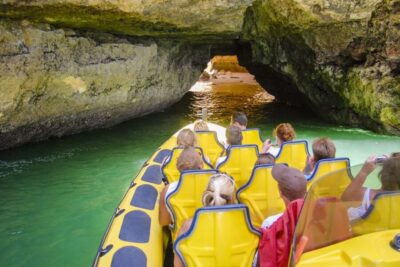
Benagil Caves & Dolphin Watching Speed Boat Tour
Read our review →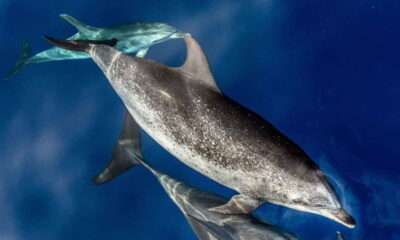
Tagus River Cruise to the Ocean & Dolphin Watching
Read our review →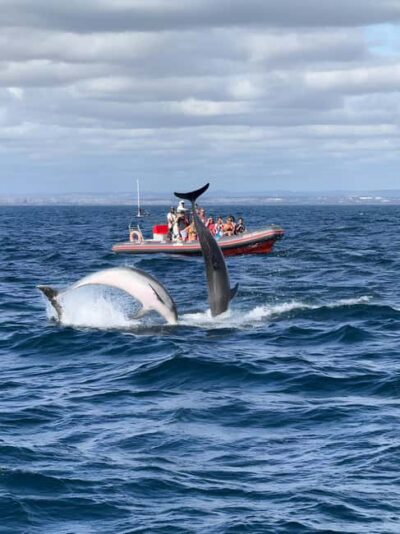
Dolphin Watching and Benagil Cave Boat Cruise
Read our review →Browse the lists this tour appears in